 Get A Quote



 English
 中文简体
Selecting office furniture for a commercial project involves more than comparing appearance and price. Businesses need to consider product specifications, daily operating conditions, installation requirements, and long-term maintenance. These factors are particularly important when purchasing Electric Height Adjustable Standing Desks, because each workstation contains moving mechanical and electrical components.
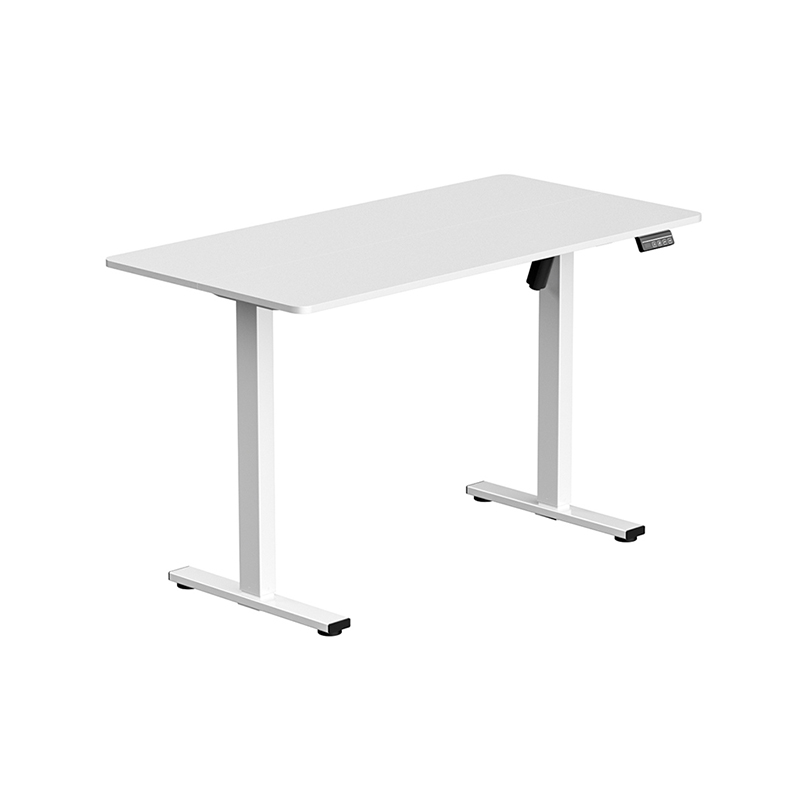
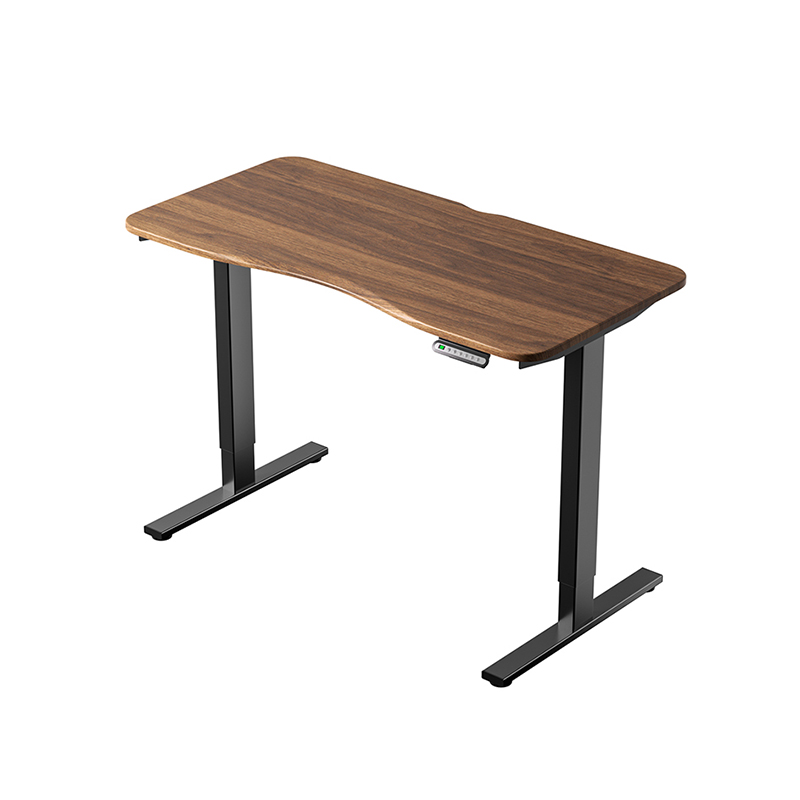
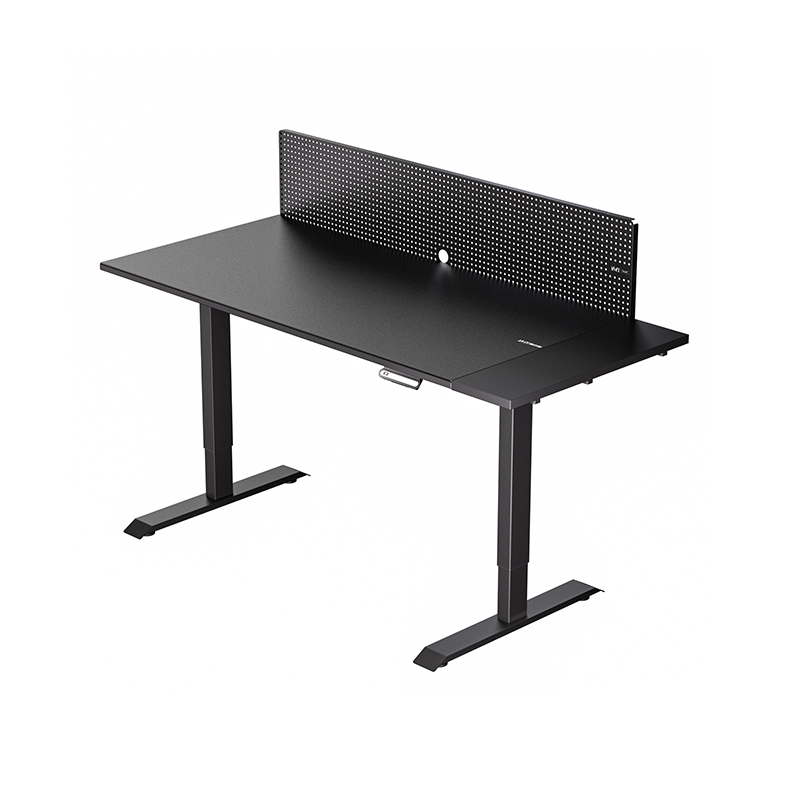
Electric standing desks allow users to raise or lower their desktops with a motorized lifting system. They are used in corporate offices, home workspaces, educational facilities, coworking environments, and other locations where adjustable work surfaces are useful.
For wholesalers, office furniture distributors, project contractors, and purchasing managers, a systematic evaluation process can make supplier comparisons more accurate. Rather than focusing on a single feature, buyers should assess the complete desk configuration and determine whether it meets the requirements of the intended application.
1. Check the Desktop Dimensions and Material
Desktop size affects how much working space is available and how easily the desk fits into an office layout. A compact surface may accommodate a laptop and one monitor, while a larger workstation may be needed for multiple screens, documents, and accessories.
Before placing an order, measure the intended installation area and identify the equipment that each desk must support. Buyers should also consider the space required for chairs, drawers, storage units, and movement around the workstation.
Desktop materials vary by manufacturer and product range. Common options include particleboard with a decorative finish, MDF, solid wood, and other engineered or composite materials. Each option has different characteristics related to weight, surface appearance, cleaning, and cost.
The desktop's thickness and construction also influence the overall configuration. A heavier desktop adds to the load carried by the lifting system, so material selection should be considered together with the frame's rated capacity.
For bulk procurement, confirm the available colors, edge treatments, surface finishes, and dimensional tolerances. If the project requires a consistent appearance across multiple offices, request samples or approved finish references before mass production.
2. Evaluate the Electric Lifting System
The lifting mechanism is one of the most important components of Electric Height Adjustable Standing Desks. It determines how the desktop moves between its lowest and highest positions.
A typical system includes lifting columns, one or more electric motors, a control box, and an operating panel. Some models use a single motor, while others use dual motors. The appropriate configuration depends on the manufacturer's engineering, the desk's load requirements, and the intended operating conditions.
Buyers should compare the minimum and maximum heights, lifting speed, operating noise, and rated load capacity. These figures should come from the specifications for the exact model rather than from general descriptions of a product series.
It is also useful to ask about the expected operating cycle. A desk used occasionally in a private home may experience different usage patterns from a desk in a shared office where employees adjust the height several times throughout the day.
Motor synchronization is another consideration for models with multiple lifting columns. The system should maintain coordinated movement under normal operating conditions. Buyers can request technical information or sample testing results to understand how the manufacturer evaluates lifting performance.
3. Compare Load Capacity and Frame Stability
The stated load capacity should be compared with the total weight of the desktop, monitors, computer equipment, and accessories. A desk that supports a lightweight laptop setup may not be suitable for a workstation with several monitors and heavy peripherals.
It is important to distinguish between static load capacity and the load permitted during height adjustment. Manufacturers may specify these values differently, so purchasing teams should confirm the applicable rating and operating conditions.
Frame stability also deserves attention. The desk should remain reasonably steady during typing and ordinary desktop activities, including when the work surface is raised.
Several factors can influence stability, including frame geometry, steel thickness, lifting-column design, fastener quality, desktop size, and assembly accuracy. The stability of the complete desk is more meaningful than the specification of an individual frame component.
For commercial orders, buyers may request sample testing under representative conditions. Testing can include raising and lowering the desk with a specified load, checking movement consistency, and observing stability at different heights.
4. Review the Control Panel and Safety Functions
The control system affects how easily employees can adjust their workstations. Basic controls allow users to move the desktop up or down, while more advanced panels may include programmable height presets and digital displays.
Memory presets can be particularly useful in shared offices. Employees can save preferred sitting and standing positions and return to them without repeatedly adjusting the height manually.
Safety features should also be evaluated. An anti-collision function may detect resistance or contact with an obstacle and stop or reverse the desktop's movement, depending on the system. Its performance can vary between models, so buyers should confirm the feature's operating behavior and limitations.
Other questions include whether the controls have a lock function, how the desk responds after a power interruption, and what error indicators are available for troubleshooting.
For large installations, consistent control-panel functions across the purchased models can simplify employee training and maintenance.
5. Consider Assembly, Packaging, and Installation
Electric Height Adjustable Standing Desks usually arrive with several components that must be assembled. The number of parts, wiring arrangement, fasteners, and installation instructions all affect the assembly process.
For distributors and project contractors, packaging quality is important because desks may travel through several stages of transportation before reaching the end customer. Protective packaging should account for the desktop edges, lifting columns, control components, and other parts that could be damaged during handling.
Ask suppliers about carton dimensions, package weight, packing methods, and loading quantities. These details help buyers estimate shipping costs and plan warehouse storage.
Installation requirements should also be clear. Confirm whether the product includes the necessary fasteners, power components, and instructions. For projects involving many desks, assembly time per workstation can affect the overall installation schedule.
6. Assess Supplier Reliability and After-Sales Support
A competitive quotation does not provide a complete picture of a supplier's capabilities. Buyers should also evaluate production consistency, communication, documentation, and the availability of replacement components.
Useful questions include:
-
Can the supplier provide detailed specifications for each model?
-
Are samples available for performance evaluation?
-
What quality inspection procedures are used during production?
-
What warranty terms apply to the frame, motor, and control system?
-
Are replacement lifting columns, control boxes, and panels available?
-
What are the minimum order quantity and production lead time?
-
Can the supplier provide packaging details and export documentation?
These questions are particularly relevant for wholesalers and distributors who need to support customers after delivery. Clear service arrangements can make it easier to handle technical questions and product maintenance.
Purchasing Electric Height Adjustable Standing Desks requires a balanced assessment of desktop materials, lifting performance, load capacity, frame stability, controls, packaging, and supplier support. The appropriate specifications depend on the application, expected workload, and budget of each project.
By comparing complete product configurations and verifying technical information before ordering, buyers can make more informed procurement decisions. A supplier that provides clear specifications, consistent manufacturing quality, and practical after-sales support can also help simplify long-term product management.


 Add: Building18, No. 331, Haidong Road, Lihai Street, Yuecheng District, Shaoxing City, Zhejian, China
 Tel: +86-18057599511 / +86-0575-89291658
 Fax: +86-0575-89291658
 Email:
