 Get A Quote



 English
 中文简体
Introduction
The performance of an electric standing desk depends on more than its ability to move up and down. Motor configuration, lifting columns, frame construction, control electronics, load distribution, and desktop dimensions all influence how the product operates. For office furniture manufacturers, distributors, and commercial buyers, understanding these components helps when comparing Electric Height Adjustable Standing Desks from different suppliers.
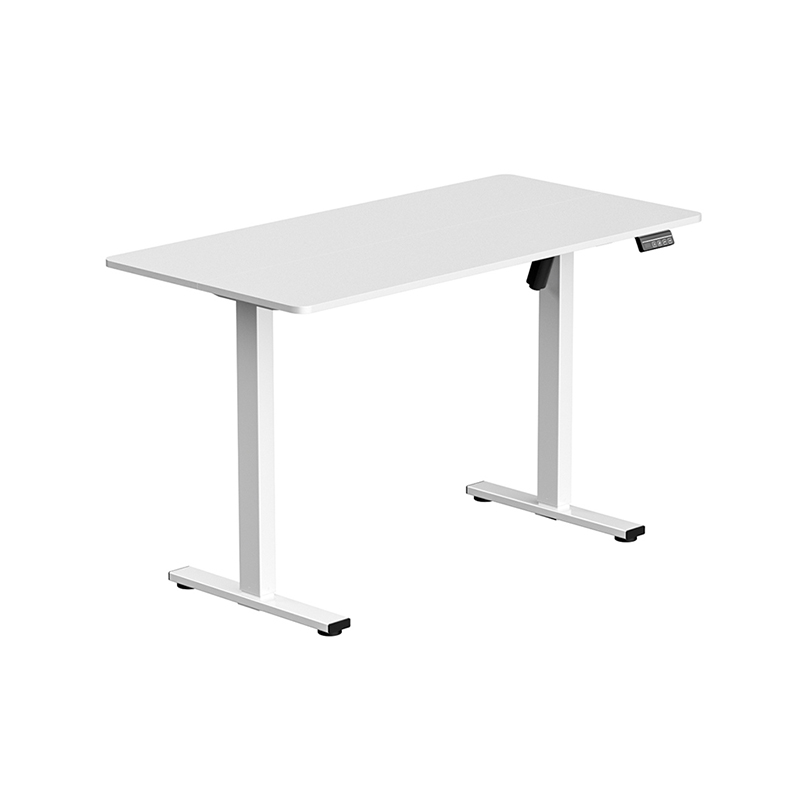
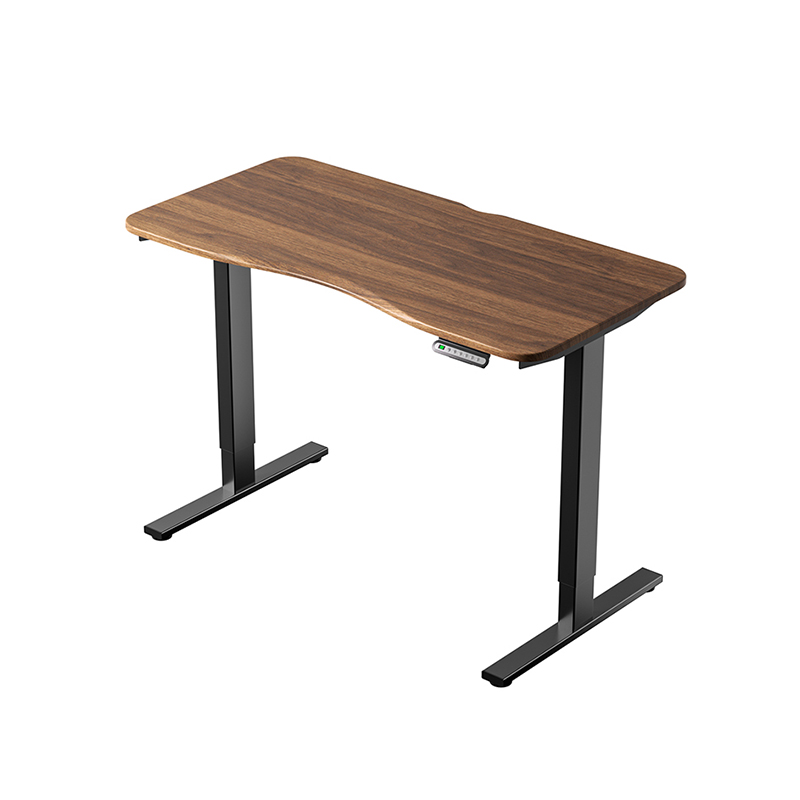
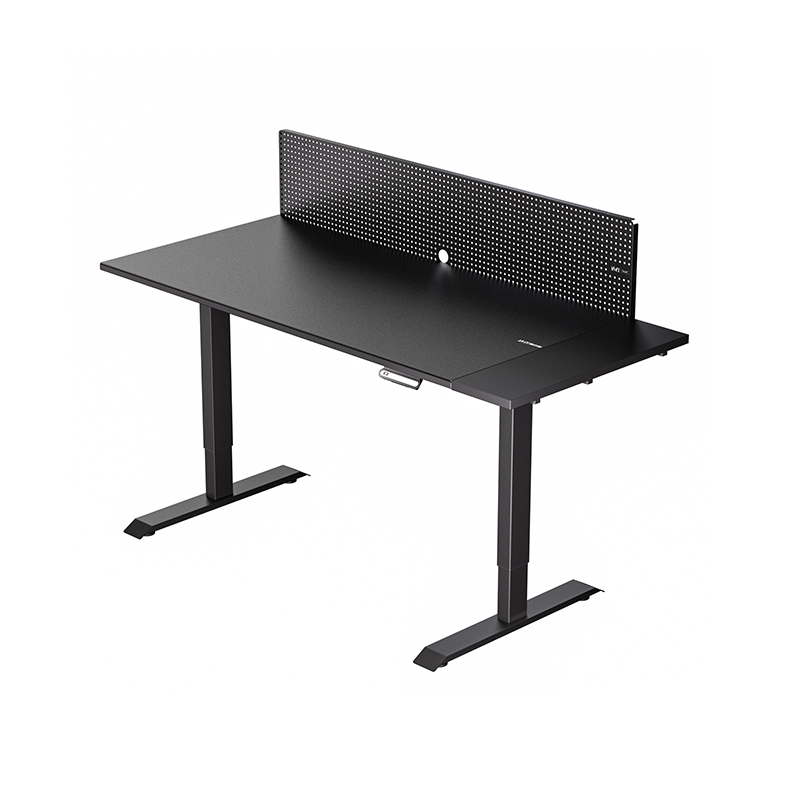
An electric standing desk uses a motorized mechanism to adjust the work surface. The user operates a control panel to raise or lower the desktop, making it possible to change working positions without manually adjusting the frame.
Although products may appear similar from the outside, their internal structures and technical specifications can differ considerably. Evaluating these differences can help businesses select a model suited to its expected workload and operating environment.
1. Motor Configuration and Lifting Performance
The motor system provides the power required to move the desktop. Depending on the product, a desk may use a single motor or a dual-motor configuration.
A single-motor desk typically uses one motor to drive its lifting mechanism. Its performance depends on the motor, transmission arrangement, lifting-column construction, and control system. This configuration may suit certain desktop sizes and load requirements.
A dual-motor desk generally uses two motors, often integrated into separate lifting columns. The control system coordinates their operation to raise or lower the desktop. This arrangement can support higher load ratings or faster adjustment in some product designs, but the actual results depend on the manufacturer's engineering.
Buyers should not assume that the number of motors alone determines product quality. They should compare the rated lifting capacity, adjustment speed, operating noise, synchronization performance, and specified operating cycle.
For offices where desks are adjusted frequently, consistent movement and reliable operation are particularly important. Requesting technical specifications and testing a sample under representative conditions can provide a more useful assessment than relying on motor count alone.
2. Lifting Columns and Height Adjustment Range
Lifting columns connect the upper frame structure with the lower support section and guide the desktop's vertical movement. Their design affects the desk's adjustment range, structural rigidity, and compatibility with different frame configurations.
Some electric standing desks use two-stage lifting columns, while others use three-stage designs. The practical difference depends on the column dimensions and the overall mechanism.
A three-stage column may allow a broader adjustment range within a particular frame design, but this is not a universal rule. Buyers should review the actual minimum and maximum desktop heights stated by the manufacturer.
The adjustment range should match the intended users. A desk used by employees of different heights may need a wider range than a workstation intended for one person.
The columns should also operate smoothly throughout their travel. Uneven movement, unusual noise, or inconsistent stopping behavior can indicate that the system requires inspection or adjustment.
When evaluating a supplier, ask whether the stated height measurements include the desktop. This detail helps ensure that product comparisons use consistent reference points.
3. Frame Construction and Desktop Stability
The frame supports the desktop and helps maintain its position during daily work. Steel frames are common in electric height adjustable desks because they provide a structural base for the lifting columns and desktop.
Frame performance depends on several factors, including steel thickness, crossbar arrangement, foot dimensions, connection points, and manufacturing accuracy. The relationship between these elements matters more than any single specification considered in isolation.
Stability should be evaluated at different heights because a raised desktop may behave differently from one in its lowest position. The desk should remain suitable for ordinary tasks such as typing, writing, and using computer equipment.
Desktop size and weight also affect the complete structure. A wider or heavier desktop can change the load distribution and may require a compatible frame configuration.
Buyers who plan to install large monitors or other heavy equipment should confirm the rated capacity and the manufacturer's mounting recommendations. The distribution of weight across the surface can also influence performance.
For commercial procurement, sample inspection should include frame assembly, fastener quality, column alignment, and movement at several desktop heights.
4. Control Boxes and Operating Panels
The control system coordinates the lifting mechanism and allows users to adjust the desk. It typically includes a control box, an operating panel, and electrical connections to the motor or motors.
A basic panel may provide only upward and downward controls. More advanced models may include a digital height display, programmable memory positions, and additional operating functions.
Memory presets can help employees return to preferred sitting and standing heights. In shared workspaces, this can reduce repeated manual adjustments and make the workstation easier to use.
The control box must be compatible with the motor configuration and lifting columns. Buyers should confirm that replacement components are available and that the supplier can provide troubleshooting instructions when needed.
Other useful questions concern power interruption, reset procedures, error indicators, and the behavior of the system when an operating fault occurs. These details can help maintenance teams manage the product more effectively.
5. Load Capacity and Overload Protection
Load capacity indicates the weight that the desk is rated to support under specified conditions. The total load may include the desktop, monitor arms, monitors, computers, and accessories.
Some manufacturers provide separate figures for static loading and lifting capacity. These figures should not be treated as interchangeable. Buyers should confirm which rating applies when the desk is moving.
Overload protection, where available, can help the control system respond when the load exceeds a defined limit. However, the function and its operating threshold vary by product.
Anti-collision protection is another feature to examine. Depending on the design, the system may stop or reverse movement when it detects an obstruction or an unexpected change in resistance. It should not be treated as a substitute for checking the desk's movement area before operation.
For business buyers, clear documentation of capacity ratings and safety functions helps establish consistent product requirements across different suppliers.
6. Operating Noise and Adjustment Speed
Motor noise can affect the working environment, particularly in quiet offices, meeting areas, and home workspaces. However, noise levels depend on the motor, transmission, frame assembly, desktop load, and operating conditions.
If noise is an important purchasing criterion, ask the manufacturer whether measured noise data is available and under what conditions the measurement was taken. Comparing figures obtained under different test conditions may produce misleading results.
Adjustment speed also influences the user experience. A faster lifting mechanism may reduce the time required to change positions, but it should still provide controlled movement and remain within the manufacturer's operating limits.
Businesses should evaluate noise and speed together with load capacity, stability, and expected frequency of use rather than prioritizing one specification in isolation.
7. Quality Control and Maintenance Requirements
Manufacturing consistency is an important consideration when ordering Electric Height Adjustable Standing Desks in bulk. Variations in frame dimensions, column alignment, electrical connections, or assembly quality may affect the final product.
Buyers can ask suppliers about incoming material inspection, component testing, finished-product inspection, and functional testing before packaging. The specific procedures should match the product's design and intended use.
Maintenance requirements should also be clear. The manufacturer should provide guidance on assembly, cleaning, operating limits, troubleshooting, and any recommended inspection procedures.
For distributors, replacement-part availability is particularly useful. Access to compatible motors, control boxes, panels, and lifting columns can help simplify after-sales support.
The performance of Electric Height Adjustable Standing Desks is influenced by the combined operation of the motor system, lifting columns, frame, control electronics, and load-bearing structure. Height range, operating noise, stability, and safety functions should all be considered when comparing models.
For commercial buyers, reviewing technical documentation and evaluating a representative sample can provide a clearer understanding of product performance. A detailed assessment of the complete desk helps businesses match specifications to their intended applications and purchasing requirements.


 Add: Building18, No. 331, Haidong Road, Lihai Street, Yuecheng District, Shaoxing City, Zhejian, China
 Tel: +86-18057599511 / +86-0575-89291658
 Fax: +86-0575-89291658
 Email:
