 Get A Quote


 English
 中文简体
中文简体Tiered Cost Analysis by Pod Size and Capacity
The most immediate factor determining the price of a silent pod is its physical footprint and structural capacity. Manufacturers engineer these acoustic booths in distinct sizes to serve different functional roles within the office, with prices scaling upward as the capacity increases.
Solo Phone Booths and Single Person Working Pods
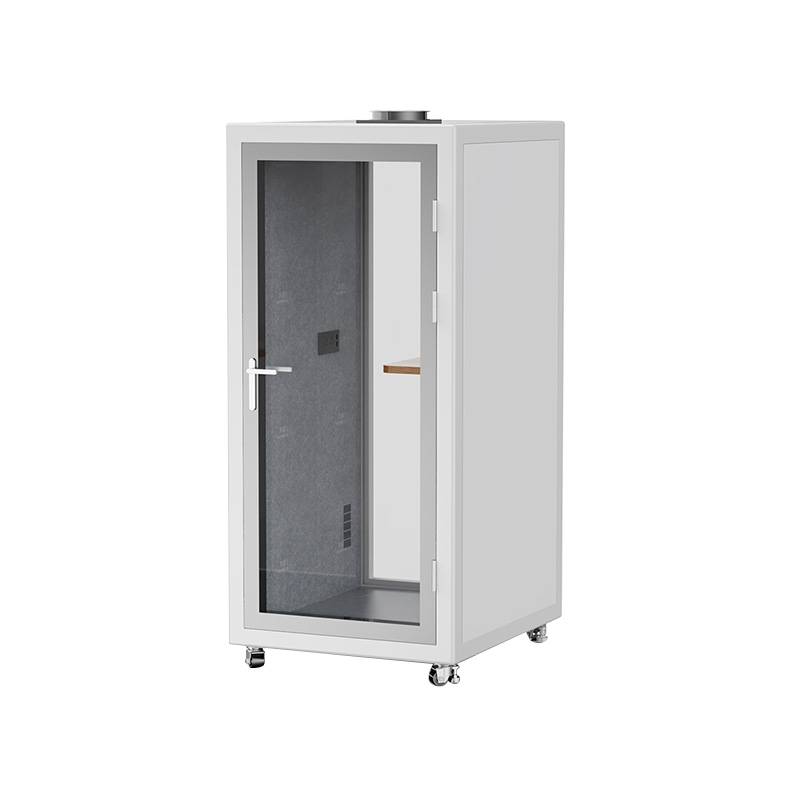
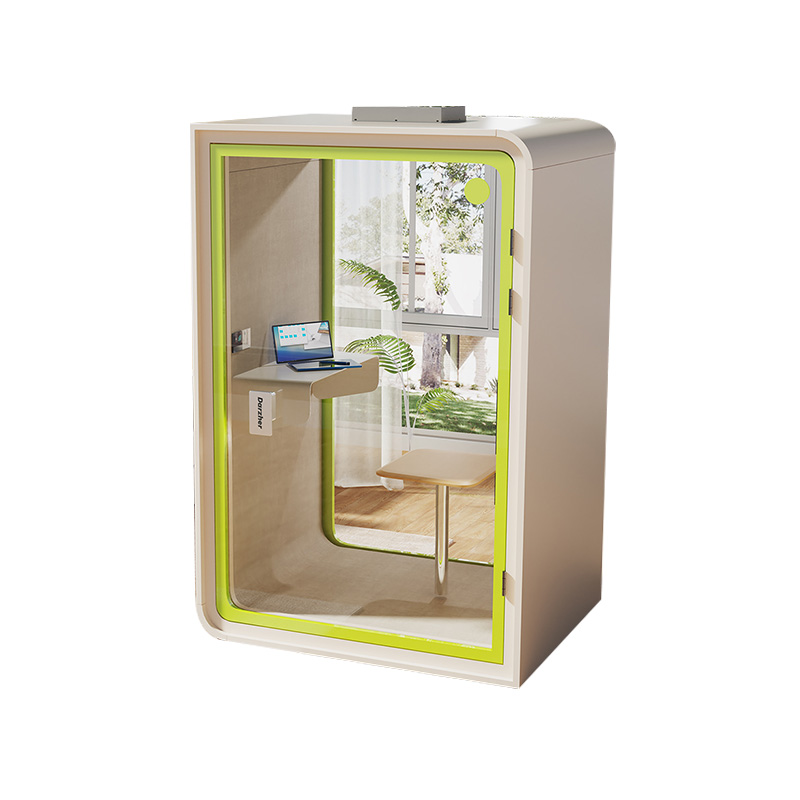
The most common and highly sought-after segment of the market is the solo silent pod, which is engineered to accommodate one occupant for short-duration tasks such as private telephone calls, video conferences, or focused computer work.
A standard entry-level solo phone booth typically ranges in price from three thousand five hundred dollars to six thousand dollars.
In this budget-friendly tier, the pod is compact, occupying roughly ten to twelve square feet of floor space, and is constructed using basic laminated wood panels, single-pane tempered glass, and standard acoustic foam insulation.
For premium solo work pods, which feature ergonomic built-in height-adjustable desks, integrated seating, and superior sound reduction, the cost can rise from six thousand five hundred dollars to over nine thousand dollars.
These premium models utilize heavy-duty aluminum framing, multi-layered acoustic glass doors, and high-density recycled polyester felt lining, providing a much higher degree of comfort and isolation for employees who spend hours inside the booth.
Two Person Collaboration and Focus Booths
As companies navigate the realities of hybrid work, the demand for small huddle spaces has spiked, leading to the popularity of the two-person silent pod.
Statistical data indicates that over fifty percent of video calls and collaboration sessions involve only two participants, making large conference rooms highly inefficient for these tasks.
A standard two-person silent pod typically costs between nine thousand dollars and fifteen thousand dollars.
This tier represents a significant step up in structural complexity and weight, with the pod occupying approximately twenty to twenty-four square feet of floor space.
The price of a two-person pod is heavily influenced by the inclusion of integrated furniture, such as dual bench seating, a central meeting table, and integrated wall mounts for flat-screen presentation displays.
Additionally, because two occupants generate double the heat and carbon dioxide of a solo worker, these pods require more advanced, multi-fan ventilation systems that can cycle air silently, which increases the engineering and manufacturing cost of the unit.
Medium to Large Multi Person Meeting Rooms
For teams that require private huddle spaces, brainstorming zones, or client presentation rooms, manufacturers produce medium and large silent pods designed to seat four, six, or even eight people comfortably.
A four-person meeting pod typically costs between fifteen thousand dollars and twenty-five thousand dollars, while larger six-to-eight-person boardrooms can easily exceed thirty-five thousand dollars.
These substantial structures are essentially micro-architecture on wheels, requiring robust steel sub-frames, heavy-duty double-glazed glass walls, and modular wall panels that can be expanded or contracted as the office layout changes.
The high cost of these large-format pods is driven by the necessity of advanced structural engineering.
To support the massive weight of the safety glass and steel frame, which can exceed one thousand five hundred pounds, these pods must incorporate reinforced heavy-duty casters and leveling feet.
Furthermore, large meeting pods require highly complex air distribution networks, dimmable smart LED lighting, extensive power strip connectivity, and dedicated structural conduits for running localized Ethernet and HDMI wiring.
Essential Material and Technology Factors Driving the Cost
The wide price variation between budget-friendly imports and premium European-designed silent pods is directly linked to the quality of the raw materials, the acoustic engineering, and the technological systems integrated into the structure.
Acoustic Engineering and Sound Isolation Materials
The primary metric of a silent pod's performance is its ability to block sound, which is measured by the Sound Transmission Class rating, widely abbreviated as STC.
To achieve a high STC rating, typically between thirty and forty-five, manufacturers must invest in specialized, high-density materials that prevent sound waves from penetrating the walls.
Budget silent pods often utilize basic drywall, thin plywood, or single-pane tempered glass, which provides minimal sound reduction, often allowing occupants to hear muffled office chatter or leaked private conversations.
Premium silent pods, in contrast, are constructed using multi-layered sandwich panels.
These advanced panels consist of a high-density sheet metal outer shell, a sound-damping viscoelastic membrane, a core of structural acoustic rockwool, and an interior lining of thick, recycled polyester acoustic felt.
The glass door and back walls are also a major cost driver. Premium pods feature dual-glazed laminated acoustic safety glass, which consists of two layers of glass permanently bonded together with an internal acoustic interlayer of polyvinyl butyral.
This laminated glass absorbs high-frequency human speech highly effectively, preventing sound leakage in both directions and accounting for a substantial portion of the overall manufacturing expense.
Ventilation Systems and Airflow Dynamics
A soundproof booth is essentially a sealed, airtight box. Without a highly efficient, continuous ventilation system, the air inside the pod would quickly become stagnant, hot, and saturated with carbon dioxide, leading to physical discomfort and reduced cognitive function for the occupant.
Designing a ventilation system that can move large volumes of air without introducing distracting mechanical noise is one of the most difficult engineering challenges in pod manufacturing.
To maintain comfort, a quality silent pod must cycle and refresh the air inside the chamber every sixty to ninety seconds.
For a single-person booth, this requires moving approximately thirty cubic meters of air every hour.
To achieve this airflow silently, premium manufacturers utilize custom-engineered, brushless direct-current turbine fans that operate at ultra-low decibel levels, typically below thirty decibels.
Additionally, the air intake and exhaust ports must be designed with complex acoustic baffles, which are winding, foam-lined pathways that allow air to flow freely while forcing sound waves to bounce and dissipate within the muffling channels.
These silent, high-performance ventilation networks, along with integrated carbon air filters, add hundreds of dollars to the production cost of each pod unit.
Power Connectivity and Smart Integration
Modern workers depend entirely on continuous electrical power and high-speed data connectivity to perform their daily tasks.
Therefore, a silent pod must serve as a fully functional digital workstation.
The electrical integration inside a pod includes built-in universal power outlets, rapid-charging USB-A and USB-C ports, and dedicated RJ45 Ethernet jacks that sit flush behind the workstation desk.
The cost of this electrical system is driven by the necessity of safe, plug-and-play operation.
High-quality pods are engineered to run off a single standard fifteen-amp, one hundred twenty-volt wall outlet.
The internal electrical components must be thoroughly insulated, grounded, and certified by international safety bodies, such as Underwriters Laboratories or Intertek, to prevent any fire or shock hazards.
Furthermore, premium pods incorporate intelligent control systems, including infrared motion sensors that automatically activate the ventilation fans and dimmable LED lighting upon entry, and turn them off when the pod is unoccupied to save energy.
These smart automation systems, combined with optional additions like integrated Bluetooth audio speakers and external occupancy indicator lights, represent a significant technological expense that is reflected in the final retail price.
Qualitative Evaluation of Office Pod Cost Factors
To help business owners and facilities managers evaluate different product offerings on the market, the table below provides a qualitative analysis of how various design choices and components influence the overall purchase price and operating cost of a silent pod.
|
Cost Influencing Component |
Low-Cost Entry Tier |
Premium Quality Tier |
Impact on Overall Pod Cost |
Practical Performance Trade-Off |
|---|---|---|---|---|
|
Main Frame Structure |
Thin cold-rolled steel or plastic joints |
Heavy-duty extruded aluminum and steel sub-frames |
Moderate to high cost increase |
Premium frame provides superior structural rigidity and prevents wall sagging over years of use |
|
Glass Panel Quality |
Single-pane tempered safety glass |
Dual-glazed laminated acoustic glass with PVB interlayer |
High cost increase |
Laminated glass provides exceptional sound dampening of human speech, whereas single-pane leaks sound |
|
Interior Linings |
Thin polyurethane foam or basic polyester fabric |
High-density recycled PET felt with custom acoustic patterns |
Moderate cost increase |
Premium felt absorbs internal sound reflections, preventing echo and hollow-sounding video calls |
|
Ventilation Fans |
Standard computer cooling fans with high-RPM sleeve bearings |
Custom brushless DC turbine fans with acoustic baffle mufflers |
High cost increase |
Brushless turbines move massive volumes of air silently, while cheap fans create a loud, distracting hum |
|
Mobility and Leveling |
Fixed nylon glides with no moving capability |
Heavy-duty integrated casters with adjustable leveling feet |
Low to moderate cost increase |
Integrated casters allow a two-man team to roll and reposition the pod easily during office rearrangements |
|
Safety Certifications |
Self-certified components with no official listings |
Full ETL, UL, and CE certifications for the entire assembly |
Moderate cost increase |
Official safety certifications ensure compliance with local electrical codes, preventing building inspector fines |
Hidden and Post-Purchase Costs of a Silent Pod
When planning the budget for an acoustic office pod project, looking solely at the manufacturer's suggested retail price is a major financial mistake. Several significant post-purchase expenses must be calculated to determine the true, fully deployed cost of the equipment.
Logistics Shipping and White-Glove Installation Services
A silent pod is a heavy, bulky piece of equipment that is shipped from the factory in a flat-packed, disassembled state to prevent damage and minimize freight volume.
Because of the massive weight, which typically ranges from five hundred pounds for a solo booth to over one thousand five hundred pounds for a meeting pod, standard parcel delivery is impossible.
Freight shipping and delivery fees can add five hundred dollars to one thousand five hundred dollars to the total cost, depending on the distance from the manufacturer's warehouse to your office.
Additionally, once the flat-packed crate arrives at your building's loading dock, the materials must be transported up elevator shafts and assembled on site.
While some small phone booths are designed for DIY assembly, larger pods require professional, white-glove installation services.
A professional installation team typically consists of two to three certified technicians who possess the specialized tools and training required to align the heavy glass panels, connect the integrated electrical wiring, level the frame on uneven office floors, and test the ventilation systems.
White-glove assembly services typically start at one thousand dollars and can rise significantly for large-format meeting rooms, making professional installation a major line item in the overall project budget.
Permit Requirements and Fire Safety Compliance
In many municipal jurisdictions, adding an enclosed, ceilinged structure to an existing office floor is legally classified as creating a new room, which triggers strict local building code requirements and fire safety compliance checks.
Failure to account for these local regulations can result in severe building inspector fines, forced removal of the equipment, or the voiding of your commercial property insurance policy.
To comply with fire safety codes, particularly NFPA thirteen in the United States, any enclosed structure with a ceiling must have adequate fire protection.
For some local authorities, this means the silent pod must be integrated into the building's existing fire sprinkler network, which requires hiring a licensed plumber to run copper lines through the top of the pod, adding thousands of dollars in labor and permit fees.
To avoid this plumber expense, premium manufacturers engineer specialized sprinkler-access panels, or design the pod ceiling to automatically open when a fire alarm is triggered, allowing the building's ceiling sprinklers to protect the interior.
Furthermore, the pod must be verified as fully compliant with the Americans with Disabilities Act, widely known as ADA, which requires wheelchair-accessible doors, flush thresholds with no floor ramps, and specific interior turning radii.
ADA-compliant pods are physically wider and incorporate specialized automatic door operators, which can double the purchase price of the unit compared to standard models.
Comparative Cost and ROI Evaluation of Office Pods
To justify the significant capital expenditure of purchasing a silent pod, business owners must compare the cost of modular pods against the traditional alternative, which is constructing permanent drywall meeting rooms.
Traditional Drywall Construction Costs
Building a permanent, six-by-six-foot drywall meeting room with glass partition doors and integrated electrical outlets is a highly disruptive, labor-intensive, and expensive process.
A traditional construction project requires hiring a general contractor, obtaining municipal building permits, and managing multiple specialized trades, including framers, drywallers, painters, electricians, and HVAC technicians.
In Class-A or Class-B commercial office buildings, the cost of constructing a small private room typically ranges from fifteen thousand dollars to over twenty-five thousand dollars once the expenses of permits, architectural fees, electrical rough-ins, and paint are fully calculated.
Furthermore, drywall construction is a messy, noisy process that generates significant airborne dust and disruptions, often forcing nearby employees to work from home for weeks, which represents a substantial, unquantifiable loss of corporate productivity.
Modular Pod Investment Offsets
A modular silent pod provides a highly compelling financial alternative to permanent drywall construction, offering a much faster and more flexible return on investment.
First, because a silent pod is self-contained and plug-and-play, there is zero construction downtime, allowing the office to remain fully operational during assembly, which typically takes under two hours for a solo booth.
Second, a silent pod is classified as furniture rather than permanent building infrastructure, which offers significant tax advantages.
In many countries, furniture assets can be depreciated much faster than building improvements, allowing businesses to write off the capital expense of the pod over a shorter timeframe to maximize tax savings.
Third, and most importantly, modular pods represent a relocatable asset.
If your company outgrows its current office space or decides to move to a different building at the end of the lease, you can simply unplug the silent pod, roll it onto a moving truck, and reinstall it in your new workspace.
With traditional drywall construction, the entire fifteen thousand or twenty-five thousand dollar investment in the private room is permanently lost, as the drywall must be demolished, and the space must be restored to its original open layout before handing the keys back to the landlord, turning your physical improvements into a double construction liability.
Maintenance and Longevity Management to Protect the Investment
An office silent pod is a significant long-term capital asset, and to protect your investment and preserve its acoustic performance and visual appeal over years of continuous use, your maintenance crews must implement proper, systematic care protocols.
Cleaning Protocols for Acoustic Panels and Glass
The exterior steel and laminate panels of a silent pod are highly durable, but they require regular wiping with a soft, non-abrasive microfiber cloth dampened with a mild, pH-neutral soapy water solution to remove greasy fingerprints, dust, and beverage spills.
Avoid utilizing aggressive, solvent-based chemical cleaners, ammonia, or abrasive scrubbing sponges, as these substances can easily scratch the protective polyurethane coatings, leading to cloudiness on the glass and discoloration of the metal panels.
The interior acoustic felt, which is constructed from recycled polyester fibers, possesses a highly porous surface that can act as a trap for airborne dust, lint, and loose hair.
To maintain clean air quality and prevent odor buildup, the interior walls should be vacuumed gently using a soft upholstery brush attachment at least once every two weeks.
If a liquid stain occurs on the felt, spot-clean the area immediately by dabbing it gently with a clean, dry microfiber towel, and then apply a specialized water-based fabric cleaner, avoiding rubbing the felt aggressively to prevent the fibers from pilling or fuzzing.
For the double-glazed glass doors, standard alcohol-free glass cleaners should be applied to preserve the clear optical clarity of the panels.
Always spray the cleaning liquid directly onto the microfiber cloth rather than the glass itself, as excess liquid can run down the glass edge and seep into the acoustic seals, causing the rubber gaskets to swell, deteriorate, and compromise the sound isolation barrier.
Component Replacement and Warranty Security
The electrical and mechanical components inside a silent pod, particularly the ventilation fans, motion sensors, and LED drivers, are subjected to continuous duty cycles and will eventually wear down over years of daily service.
To minimize equipment downtime and prevent costly out-of-pocket repairs, you must verify the warranty terms before purchasing.
A high-quality silent pod should come with a comprehensive manufacturer warranty of at least three to five years, covering the structural steel frame, the acoustic glass panels, and the internal electronic components.
Verify that the manufacturer maintains a local inventory of replacement parts, including spare fan motors, replacement power modules, and spare door alignment hinges, ensuring that if a fan motor develops a loud squeak or fails entirely, a technician can swap out the component quickly on site.
Regularly check the condition of the magnetic door gaskets, which run along the edge of the door frame to seal the opening completely.
If a magnetic gasket becomes cracked or loses its magnetic force, a small gap will form when the door is closed, allowing high-frequency sound waves to escape easily and significantly reducing the acoustic effectiveness of the entire pod.
By replacing these inexpensive wear-prone seals and keeping the fan motors clear of dust buildup, you can ensure that your silent pod continues to provide your employees with a quiet, private, and highly productive working oasis for decades of continuous corporate service.
W2200D1535H23000000.png "Boardroom Pod")
 Add: Building18, No. 331, Haidong Road, Lihai Street, Yuecheng District, Shaoxing City, Zhejian, China
 Tel: +86-18057599511 / +86-0575-89291658
 Fax: +86-0575-89291658
 Email: