 Get A Quote



 English
 中文简体
Modern office environments often combine open workstations, meeting areas, collaborative spaces, and shared facilities. Although open-plan layouts make it easier for employees to communicate and work together, they can also create challenges when people need to handle confidential conversations, attend online meetings, or complete tasks that require concentration. Traditional meeting rooms may not always be available, especially in offices with limited floor space.
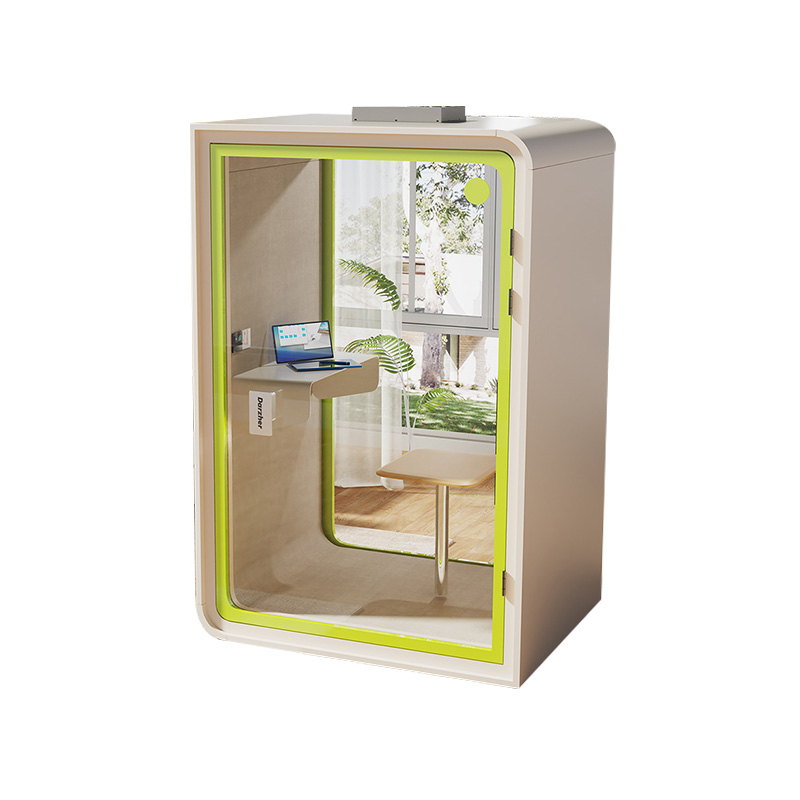
Privacy Pods provide an alternative by creating enclosed spaces within larger office environments. These compact structures offer employees a more private area for phone calls, video conferences, individual work, and short discussions without requiring the construction of permanent rooms.
As workplace layouts continue to evolve, privacy pods have become a relevant category in commercial office furniture and workspace planning. Their value depends on factors such as enclosure design, acoustic performance, ventilation, lighting, dimensions, and installation requirements. Understanding these features can help businesses determine how privacy pods fit into their office environments.
What Are Privacy Pods?
Privacy pods are enclosed or semi-enclosed structures installed inside offices and other shared environments. They are generally designed to provide a separate space for activities that require a greater degree of privacy than an ordinary open workstation can offer.
Depending on their configuration, privacy pods may accommodate one person or several users. Single-person models are commonly used for telephone calls, focused work, and online meetings. Larger models may provide space for small discussions, interviews, or collaborative activities.
Unlike traditional meeting rooms, privacy pods can often be installed as modular units without major changes to the building structure. Some products are freestanding, while others require specific installation arrangements or electrical connections.
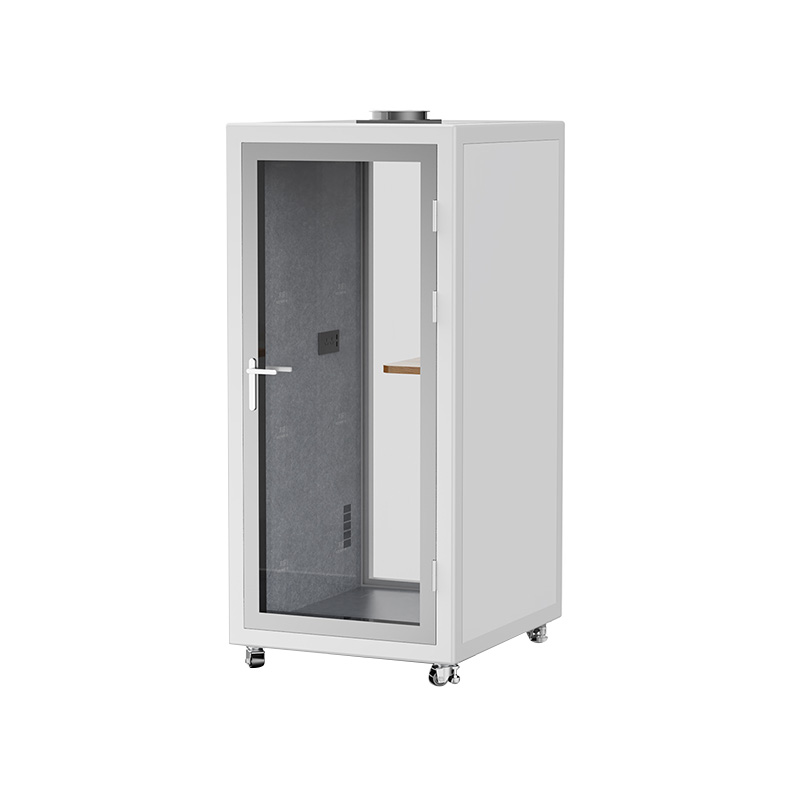
Their appearance and construction vary between manufacturers. Common design elements include structural frames, acoustic panels, glass sections, doors, ventilation systems, lighting, and integrated electrical outlets.
The actual level of privacy depends on the enclosure and its acoustic design. Buyers should distinguish between visual privacy and sound insulation because these are separate product characteristics.
Why Are Privacy Pods Useful in Open-Plan Offices?
Providing Space for Private Conversations
Employees frequently need to discuss information that should not be overheard by people working nearby. Examples include recruitment interviews, internal discussions, customer calls, and conversations involving business information.
In an open office, these activities can be difficult because desks and workstations are usually arranged in shared spaces.
Privacy Pods provide an enclosed environment where employees can conduct conversations with greater separation from surrounding activities. Depending on the product's acoustic performance, the enclosure may also reduce the transmission of speech between the pod and the surrounding office.
For businesses handling sensitive information, it is important to evaluate actual sound insulation performance rather than assuming that every enclosed pod provides complete confidentiality.
Supporting Video Conferences and Remote Communication
Video meetings have become a regular part of many office workflows. Employees may need to communicate with customers, suppliers, colleagues, or overseas business partners throughout the day.
Conducting these meetings from an open workstation can create distractions for both the meeting participant and nearby employees.
A privacy pod provides a separate location for online communication. Glass doors, internal lighting, suitable ventilation, and convenient power access can help create a more practical meeting environment.
The internal layout should also accommodate laptops, monitors, cameras, and other communication equipment when required.
Creating Individual Focus Areas
Some office tasks require employees to concentrate without frequent interruptions. Examples include writing reports, reviewing documents, preparing presentations, and handling administrative work.
Privacy pods can provide an alternative workspace when employees need temporary separation from busy office areas.
A comfortable interior is important for this purpose. The seating arrangement, desk height, lighting, ventilation, and available working space should match the expected duration and type of use.
Important Design Features of Privacy Pods
Acoustic Panels and Enclosure Materials
The materials used in a privacy pod influence its sound insulation, interior acoustics, appearance, and overall weight.
Manufacturers may use acoustic panels, composite boards, laminated materials, glass, metal frames, and other construction components.
Acoustic panels can help absorb sound inside the enclosure, while the complete wall and door construction influences how much sound passes between the pod and surrounding space.
Buyers should ask suppliers for relevant acoustic test information. Sound insulation and sound absorption describe different properties, so these should not be treated as interchangeable measurements.
Door and Glass Design
The door affects accessibility, visual privacy, and acoustic performance. A properly fitted door with suitable sealing can help reduce sound leakage through gaps around the opening.
Glass sections allow natural light and visual connection with the surrounding office. Frosted, tinted, or partially covered glass can provide additional visual privacy when required.
The choice depends on the intended application. A phone booth may prioritize visual separation, while a meeting pod may use transparent glass to maintain an open appearance.
Ventilation and Air Circulation
Because privacy pods are enclosed spaces, ventilation should be considered during product selection.
An appropriate ventilation system helps maintain air circulation when the pod is occupied. Buyers should check the ventilation configuration, airflow specifications, operating noise, and maintenance requirements.
Ventilation performance is particularly relevant for pods used frequently or for extended periods. The system should be suitable for the enclosure's internal volume and expected occupancy.
Lighting and Electrical Access
Internal lighting supports reading, writing, and video communication. The lighting arrangement should provide adequate illumination without creating excessive glare on screens or glass surfaces.
Electrical outlets and USB charging ports may also be included, depending on the model. These features allow users to connect laptops, phones, and other equipment.
For commercial projects, confirm the electrical specifications and applicable installation requirements before ordering.
How Privacy Pods Help Optimize Office Space
One advantage of modular privacy pods is that they can introduce enclosed working areas into existing office layouts.
Instead of constructing permanent rooms, businesses may be able to install pods in suitable unused areas. This can be useful in offices where renovation work is restricted or where workspace requirements change over time.
However, space planning is still necessary. The dimensions of the pod, door opening direction, surrounding walkways, electrical access, and ventilation conditions should all be checked before installation.
Businesses should also consider how many pods are needed. A small office may require only one or two units for calls and private work, while a larger workplace may benefit from several units distributed across different departments.
The purpose of each pod should be defined before selecting its size and configuration. This helps avoid purchasing units that are either too small for their intended activities or unnecessarily large for the available space.
What Should Businesses Consider Before Purchasing Privacy Pods?
For office furniture buyers and project contractors, several factors should be evaluated before placing an order.
Dimensions and capacity: Confirm the external and internal dimensions, intended number of users, and available working space.
Acoustic performance: Request test data and identify whether the product provides sound absorption, sound insulation, or both.
Ventilation: Review airflow capacity, fan noise, and maintenance requirements.
Interior configuration: Check the desk, seating, lighting, power outlets, and optional accessories.
Materials and finishes: Evaluate panel construction, glass type, surface finishes, and available colors.
Assembly and transportation: Confirm package dimensions, delivery requirements, installation procedures, and whether specialized equipment is needed.
Supplier support: Ask about warranty coverage, spare parts, customization, production lead times, and after-sales service.
For large office projects, requesting a product sample or arranging a demonstration can help purchasing teams assess the enclosure's actual usability.
Privacy Pods provide enclosed working areas for private conversations, video conferences, and individual tasks in modern shared offices. Their modular construction can help businesses introduce additional private spaces without relying entirely on permanent room construction.
When selecting a model, buyers should evaluate acoustic performance, enclosure materials, ventilation, lighting, dimensions, and installation requirements. A suitable configuration depends on the office layout and the activities employees will perform inside the pod.
For manufacturers, distributors, and commercial furniture buyers, clear technical specifications and consistent product quality are important considerations when sourcing privacy pods for office projects.


 Add: Building18, No. 331, Haidong Road, Lihai Street, Yuecheng District, Shaoxing City, Zhejian, China
 Tel: +86-18057599511 / +86-0575-89291658
 Fax: +86-0575-89291658
 Email:
