 Get A Quote


 English
 中文简体
中文简体Office noise is one of the leading causes of reduced productivity in modern workplaces. If you are evaluating solutions for your team, the Single Silent Pod is best for individual focus work and private calls, while the Connect Pod is designed for small group collaboration and meetings of two to six people. Both are purpose-built office privacy pods, but they serve fundamentally different needs. Choosing the wrong one can mean wasted budget, underused space, and frustrated employees. This guide breaks down every meaningful difference so you can make a confident decision.
Open offices have become the default layout for companies worldwide. Research from Oxford Economics found that over 50% of workers cannot block out noise in open plan offices, and Steelcase workplace surveys consistently show that employees rank the ability to concentrate as one of their top unmet needs. Acoustic pods have emerged as the most flexible and cost-effective answer to this problem, sitting somewhere between a full private office and a set of noise-canceling headphones.
Understanding what separates a Single Silent Pod from a Connect Pod, and knowing exactly which scenarios demand each type, is the foundation of any smart office privacy investment.
What Is a Single Silent Pod?
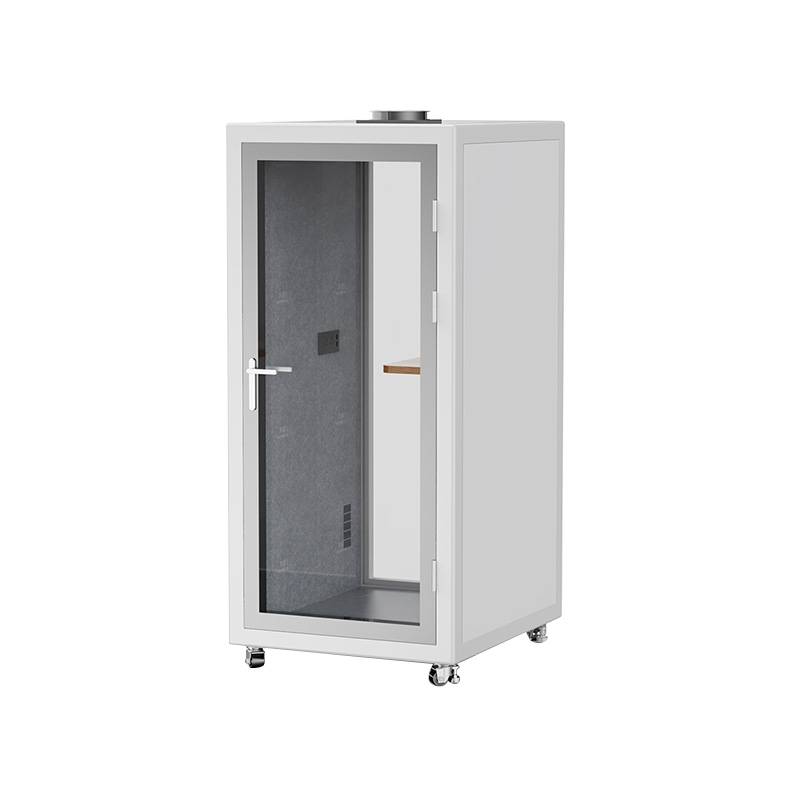
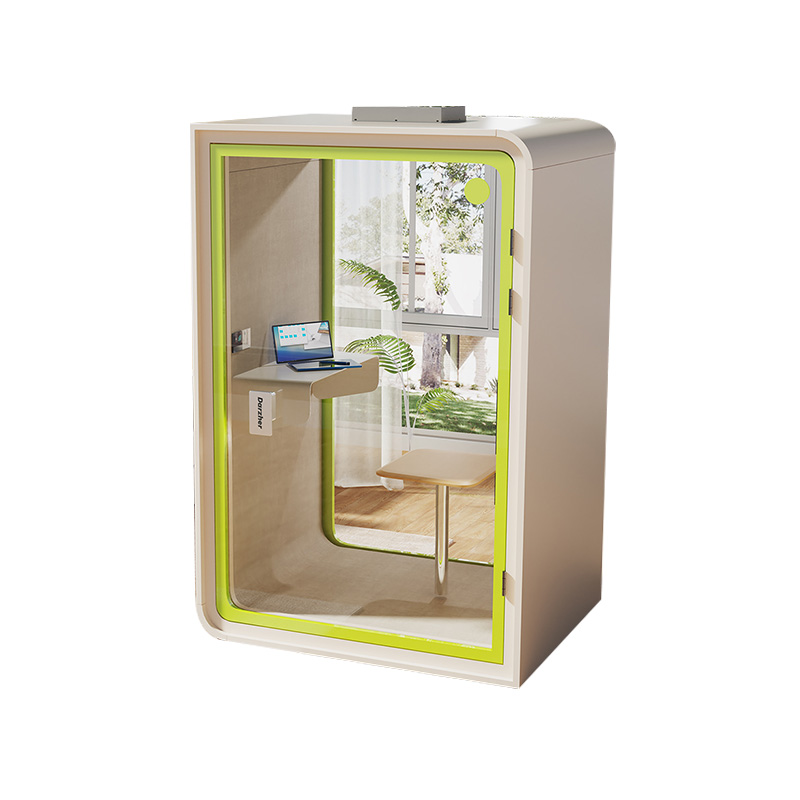
A Single Silent Pod is a freestanding, enclosed acoustic booth designed to accommodate one person at a time. It functions as a miniature private office that can be placed anywhere on an open floor plan without any construction or permanent installation. The core promise of a single silent pod for office privacy is simple: give one employee a quiet, distraction-free environment where they can work, take calls, or think without disturbing colleagues or being disturbed.
Core Features of a Single Silent Pod
While specifications vary by manufacturer and model, most high-quality single silent pods share a consistent set of features that define the category:
- Acoustic panels rated at 30 to 40 decibels of noise reduction, enough to transform a loud open office into a calm, conversational space inside the pod.
- Ventilation systems with low-noise fans to ensure adequate airflow during extended use, typically maintaining comfortable temperatures for sessions lasting up to 60 minutes or more.
- Integrated LED lighting, often with adjustable color temperature, to support focused screen work.
- Electrical outlets and USB charging ports so users can power laptops and mobile devices without leaving the pod.
- A fold-down or fixed work surface sized for a laptop and a notepad.
- Tempered glass panels or partial transparency to prevent a claustrophobic environment while maintaining visual privacy from the immediate surroundings.
- A compact footprint, typically between 1 square meter and 1.5 square meters, making deployment possible in almost any office layout.
The design philosophy behind a single silent pod for office privacy is that individual employees frequently need a space that is simply not available in most open offices: somewhere quiet enough to concentrate deeply, private enough to take a sensitive call, and accessible enough to use without booking a full meeting room hours in advance.
Who Uses Single Silent Pods and Why
Usage patterns reveal a great deal about the real-world value of single silent pods. In offices that have deployed them, the most common users include:
- Sales representatives making client calls that require confidentiality and a professional-sounding environment.
- Developers and analysts who need extended periods of deep, uninterrupted concentration.
- HR managers conducting one-on-one conversations that must remain private.
- Hybrid workers who come into the office on days when their home setups have more distractions than usual.
- Employees with sensory sensitivities who find open offices genuinely difficult to work in for long periods.
A 2023 workplace study by Leesman found that employees who have access to private focus spaces report job satisfaction scores 20% higher than those who work exclusively in open environments. Single silent pods directly address this gap.
What Is a Connect Pod?
A Connect Pod, sometimes marketed as an Office Connect Pod or Smart Connect Pod, is a larger acoustic enclosure designed to host multiple people simultaneously. Where the Single Silent Pod is fundamentally solitary, the Connect Pod is collaborative. It provides the same acoustic isolation benefits as its single-person counterpart, but scales up the interior to allow small teams to meet, brainstorm, conduct interviews, or run video conferences without taking over a full conference room.
Core Features of a Connect Pod
The Connect Pod category typically covers pods that seat anywhere from two to six people. Premium models marketed as Smart Connect Pods add technology integration that turns the enclosure into a fully equipped meeting space:
- Larger acoustic footprint, usually between 3 and 7 square meters, with seating and a central table or side-by-side bench configuration.
- Higher-capacity ventilation systems engineered to circulate air for two to six people during sessions of 30 to 90 minutes comfortably.
- Integrated display screens or monitor arms to support presentations and video conferencing.
- Ceiling-mounted or panel-integrated speakers and microphone arrays for high-quality audio during hybrid meetings.
- Room booking systems, occupancy sensors, and calendar integration in Smart Connect Pod configurations, making it possible to check availability and reserve the pod from a smartphone or desktop calendar application.
- Multiple power and data ports distributed around the seating area so every participant can connect simultaneously.
- Wider door openings and wheelchair-accessible designs in many modern Office Connect Pod models, reflecting increased attention to inclusivity.
The Rise of the Smart Connect Pod
The Smart Connect Pod represents the evolution of the basic meeting pod into a tech-enabled workspace. As hybrid work became standard after 2020, the demand for meeting spaces that support both in-person and remote participants simultaneously grew dramatically. A Smart Connect Pod bridges the gap between the physical office and the digital meeting environment. Occupancy sensors feed real-time data into facilities management dashboards, helping office managers understand how often pods are used, during which hours, and by which teams. This data is genuinely valuable: companies that track pod utilization report reducing underused meeting room bookings by up to 35%, freeing those rooms for larger gatherings that actually require them.
Single Silent Pod vs Connect Pod: A Direct Feature Comparison
The easiest way to understand the difference between these two categories is to compare them side by side across the dimensions that matter most to office planners, facilities managers, and employees themselves.
| Feature | Single Silent Pod | Connect Pod |
|---|---|---|
| Intended Users | 1 person | 2 to 6 people |
| Typical Footprint | 1 to 1.5 sq meters | 3 to 7 sq meters |
| Primary Use Case | Focus work, private calls | Meetings, collaboration, video calls |
| Noise Reduction | 30 to 40 dB reduction | 25 to 38 dB reduction |
| Technology Integration | Basic power and USB | Display, AV, booking systems (Smart models) |
| Typical Session Length | 15 to 60 minutes | 30 to 90 minutes |
| Average Cost Range | $3,000 to $10,000 | $8,000 to $35,000 |
| Installation Requirements | Plug and play, no construction | Plug and play, though larger models may need floor anchoring |
| Relocation Ease | Very easy, often on casters | Moderate, requires team effort or professional movers |
| Ventilation Capacity | Single person airflow | Multi-person airflow systems |
One important nuance this table does not capture is acoustic leakage behavior. A Single Silent Pod, because it houses only one person who is typically speaking at moderate volume on a call, achieves slightly better speech privacy than a Connect Pod where multiple people may be speaking at once. For conversations involving sensitive HR, legal, or financial information, the single silent pod for office privacy typically outperforms the Connect Pod in containing sound.
Acoustic Performance: How Each Pod Actually Reduces Noise
Acoustic performance is the core value proposition of any office privacy pod. It is worth understanding how these products achieve noise reduction, because the mechanism directly influences which use cases they serve best.
Sound Absorption vs Sound Blocking
Office pods work through two complementary mechanisms. Sound absorption uses internal materials, typically dense foam, acoustic felt, or recycled fiber panels, to trap and dissipate sound waves before they reflect back inside the pod or escape through walls. Sound blocking relies on mass and air sealing: dense panels, sealed door gaskets, and minimal gaps prevent sound from traveling in or out.
Most quality pods achieve a noise reduction coefficient (NRC) of 0.85 or above internally, meaning they absorb 85% or more of the sound energy hitting their interior surfaces. This creates a relatively dead acoustic environment inside that feels noticeably quieter than the open office outside.
Why Single Silent Pods Achieve Higher Speech Privacy
Single silent pods achieve higher speech privacy ratings for a straightforward physical reason: the smaller the interior, the lower the total volume of sound being generated. One person speaking at 60 decibels into a phone generates a sound pressure level that the pod walls can handle with excellent containment. A Connect Pod with four people in an animated discussion generates substantially more cumulative sound pressure, which increases the chance of some sound energy finding its way through panel joints, ventilation gaps, or door seals.
Industry standards for speech privacy use a metric called the Speech Transmission Index (STI), where values below 0.2 are considered unintelligible. Premium single silent pods achieve STI values as low as 0.1 to 0.15 for external listeners, effectively making conversations inside indistinguishable from background noise. Connect Pods typically achieve STI values of 0.2 to 0.3, which still represents excellent privacy but falls slightly short of the near-total isolation of smaller units.
How Outside Noise Affects Pod Users
Acoustic performance is bidirectional. Just as important as containing sound from inside is the pod's ability to prevent external noise from entering and disrupting the occupant. For someone making a sales call or attending a video interview, the quality of their experience depends heavily on how much of the open office noise bleeds in. Single silent pods, with their tighter envelopes and smaller surface areas, once again perform marginally better here. However, the difference in a well-specified Connect Pod is minimal enough that most users would not notice it during standard office conditions.
Space Planning: Fitting Pods Into Your Office Layout
One of the most practical considerations when choosing between a Single Silent Pod and a Connect Pod is the physical space available in your office and how each pod type fits into your floor plan strategy.
Single Silent Pods Maximize Density
Because they require only 1 to 1.5 square meters of floor space, single silent pods can be deployed in areas that cannot accommodate larger furniture. A corridor alcove, a corner next to a window bank, or the space between two banks of desks can all be suitable locations. For offices under 500 square meters that need to provide privacy options for a team of 20 or 30 people, deploying four or five single silent pods distributed around the floor often provides better coverage and accessibility than installing one or two Connect Pods in fixed locations.
In terms of ratio, most workspace designers recommend one single silent pod for every 8 to 12 employees in a standard open-plan environment. This accounts for typical usage patterns where not everyone needs the pod simultaneously but demand spikes during mid-morning and early afternoon call-heavy periods.
Connect Pods Need Deliberate Placement
A Connect Pod for a team of four occupies something in the range of 4 to 6 square meters including clearance on all sides. This is a significant allocation of office real estate. Unlike a meeting room that can be used flexibly from one to twelve people, a Connect Pod is optimized for a specific group size. Placing it poorly, such as in a high-traffic area where the door opening and closing disrupts surrounding workers, or too far from the teams who need it most, can dramatically reduce utilization rates.
Best practice for Office Connect Pod placement involves positioning near team clusters that frequently collaborate in groups of two to four, within 20 to 30 meters of those teams to minimize the friction of walking to and using the space. Pods placed more than 40 meters from the main work area see significantly lower utilization according to workplace analytics data.
Mixed Deployments Work Best for Most Offices
Most office environments that have invested in acoustic pods do not choose exclusively one type. A common and effective formula is to deploy two to three single silent pods for every one Connect Pod, distributed across the floor so that both individual and group needs are covered without creating long queues during peak hours. This ratio reflects the fact that in most office environments, individual focus work and private calls happen more frequently than small group meetings.
Technology Integration in Modern Office Pods
The technological gap between basic and premium pod models has widened considerably over the past five years. Understanding what technology is actually useful versus what is marketing complexity helps you avoid overpaying for features your team will not use.
Essential Technology for Single Silent Pods
For a single silent pod used primarily for focus work and calls, technology needs are modest but important. The essentials are:
- Reliable electrical power with at least two standard outlets and two USB-A or USB-C ports.
- Consistent, glare-free LED lighting with at least basic dimming capability, since many users need to look at screens.
- A ventilation system quiet enough that the fan noise does not register on video calls, ideally below 35 dB internally.
- An occupancy indicator light visible from outside so approaching employees know at a glance whether the pod is in use.
Optional but genuinely useful additions include a small screen or indicator outside the pod integrated with a calendar booking system, and a CO2 or air quality sensor that alerts the user when air quality drops and they should take a break. CO2 levels above 1,000 ppm have been shown to impair cognitive function by up to 15%, which makes air quality monitoring more than a luxury in a sealed enclosure.
Smart Connect Pod Technology Stack
The Smart Connect Pod category justifies its premium price through a technology stack that genuinely transforms how a group meeting space functions in a hybrid office. Key components typically include:
- Room booking integration with platforms like Microsoft 365, Google Workspace, and Outlook, allowing employees to reserve the pod directly from their calendar or through a dedicated app.
- Touchscreen booking panels on the exterior that display real-time availability and allow immediate ad-hoc reservations.
- Occupancy sensors that automatically release bookings if no one has entered the pod within five to ten minutes of the scheduled start time, dramatically improving utilization efficiency.
- Integrated video conferencing hardware including a wide-angle camera, speaker array, and microphone optimized for capturing group conversations clearly.
- Usage analytics dashboards accessible to facilities managers for reporting on occupancy rates, peak hours, and booking patterns.
- Automatic lighting and ventilation adjustment based on detected occupancy, reducing energy consumption when the pod is empty.
Companies that manage large office fleets with dozens of Connect Pods report that analytics from Smart Connect Pod systems have allowed them to reduce their total pod inventory by 18 to 22% while maintaining or improving employee satisfaction, simply by eliminating phantom bookings and redistributing pods to higher-demand areas.
Cost Analysis: What You Actually Pay for Each Option
Budget is almost always a factor in office fit-out decisions. A realistic cost analysis needs to account for purchase price, installation, ongoing maintenance, and the opportunity cost of floor space.
Single Silent Pod Pricing Breakdown
Entry-level single silent pods from reputable manufacturers start around $3,000 to $4,500. Mid-range models with better acoustic performance, higher-quality finishes, and improved ventilation typically cost $5,000 to $8,000. Premium models with smart booking integration and advanced air quality monitoring can reach $10,000 or more. Shipping, installation, and electrical connection costs add another 10 to 15% depending on location and complexity.
One widely cited comparison in office space planning is the cost of adding a private office through construction versus deploying a single silent pod. Construction of a new private office in a major city typically costs $15,000 to $50,000 per room when accounting for demolition, framing, electrical, HVAC, finishing, and furniture. A pod that achieves 80% of the acoustic isolation at 15 to 25% of the cost is an extraordinary value proposition for many businesses.
Connect Pod Pricing Breakdown
Connect Pods carry higher price tags that scale with size and technology. A basic two to four-person pod from an established manufacturer starts at approximately $8,000 to $12,000. Mid-range Office Connect Pod models with integrated AV equipment and booking system compatibility range from $15,000 to $22,000. Smart Connect Pod configurations with full video conferencing hardware, analytics dashboards, and premium acoustic panels can cost $25,000 to $35,000 or more for a six-person unit.
The comparison to a traditional meeting room is even more compelling at this scale. A properly equipped small meeting room in a renovated office space, including construction, AV equipment, furniture, and HVAC modifications, routinely costs $40,000 to $100,000. A Smart Connect Pod that seats four people with full video conferencing capability represents a saving of 50 to 75% compared to constructing an equivalent permanent meeting room, while also being movable if the business relocates or reconfigures.
Total Cost of Ownership Over Five Years
When evaluating pods as a long-term investment, consider these ongoing cost factors:
- Energy consumption: Most pods consume between 50 and 150 watts during operation, making annual electricity costs minimal.
- Cleaning and maintenance: Acoustic panels may need cleaning or replacement every three to five years depending on usage intensity.
- Technology refresh: Smart Connect Pod software and AV hardware may require updates or replacement within five to seven years as technology evolves.
- Warranty and support: Leading manufacturers offer three to five year warranties on structural components and one to two years on electronics.
Use Case Scenarios: Which Pod Fits Which Situation
Abstract comparisons are useful, but concrete scenarios bring the decision to life. Here are the most common situations offices face and which pod type serves each one best.
Scenario 1: A Sales Team That Makes 30 or More Calls Per Day
A ten-person sales team in an open office generates constant noise from simultaneous calls and creates a chaotic acoustic environment for everyone nearby. Each salesperson needs brief, private, quiet spaces to conduct individual calls without being overheard by clients or disrupting colleagues. This is a textbook application for single silent pods. Deploying two to three single silent pods for a ten-person sales team typically covers peak demand without requiring every person to have a dedicated private space. Usage rotates naturally through the day as call schedules vary.
Scenario 2: A Product Team That Conducts Regular Sprint Reviews
A product team of eight needs a space to conduct weekly sprint reviews with two to four team members present in-person and three to four joining remotely. They need a display screen for sharing wireframes, a camera that captures everyone in the room, and microphones that make remote participants feel included. A Single Silent Pod cannot accommodate this group. A Smart Connect Pod seating four, equipped with a mounted display and conferencing hardware, serves this use case precisely. The booking system integration means the team can reserve the pod weekly without friction.
Scenario 3: An HR Department Handling Sensitive Conversations
HR managers frequently need to hold conversations involving personal health information, performance reviews, or disciplinary matters. These conversations require the highest possible speech privacy. A single silent pod for office privacy is the ideal solution here. The contained interior, tight door seals, and smaller acoustic profile ensure that conversations remain genuinely private, not merely muffled. Speech Transmission Index values below 0.15 make overheard conversations effectively unintelligible, which is the benchmark HR teams should look for when specifying pods for sensitive work.
Scenario 4: A Creative Agency That Brainstorms in Pairs
Creative teams often work in pairs or trios to develop concepts before presenting to larger groups. A two to three person Connect Pod gives a creative pair a dedicated space to sketch, discuss, and review work without booking a formal meeting room for a casual session. The casual seating and writeable surface options in some Connect Pod models support the informal, iterative nature of creative work. For this use case, a mid-range Office Connect Pod without the full Smart Connect Pod technology stack is likely sufficient and more cost-effective.
Scenario 5: A Hybrid Office Optimizing for Peak Days
Many offices now see extreme peaks in occupancy on Tuesday, Wednesday, and Thursday, while Monday and Friday are significantly quieter. On peak days, both individual and group acoustic spaces are under high demand simultaneously. A mixed deployment strategy, typically a ratio of two single silent pods to one Connect Pod, ensures that both solo workers and small groups have adequate access to private space without the office over-investing in either category. Smart booking systems that show real-time availability across all pods further smooth demand distribution.
Ergonomics and Comfort: What It Actually Feels Like to Use Each Pod
Acoustic performance and technology specifications matter, but employees ultimately judge pods on how comfortable they are to actually use. A pod that is acoustically excellent but physically uncomfortable will see low utilization regardless of its technical merits.
Ergonomics Inside Single Silent Pods
The ergonomic challenge of single silent pods is their small footprint. Well-designed models address this by offering height-adjustable work surfaces, supportive seating with lumbar support, and lighting positioned to reduce screen glare. The best single silent pod designs feel more like a compact home office than a cramped cubicle. Entry-level models sometimes compromise here, offering fixed-height counters at a height optimized for standing only or seating without back support. Before investing, it is worth testing representative samples and asking employees to work in them for at least 30 minutes to identify comfort issues.
Thermal comfort is also important. Without adequate ventilation, CO2 and body heat can accumulate quickly in a sealed single-person enclosure. Quality pods maintain comfortable temperatures for 45 to 60 minutes of continuous use through active ventilation. Cheaper models may become uncomfortable after 20 to 30 minutes, which limits their usefulness for anything beyond short calls.
Ergonomics Inside Connect Pods
Connect Pods benefit from more generous dimensions but introduce their own ergonomic considerations. Seating configuration matters significantly: pods where all participants face a central table with eye contact with one another support natural conversation better than linear arrangements where people sit side by side. Display positioning is equally important, as screens placed too low or too far from seats reduce the quality of the hybrid meeting experience for remote participants.
Ventilation becomes more critical in Connect Pods due to the higher number of occupants. Industry guidance suggests that a four-person pod should provide a minimum of 25 liters of fresh air per second per person to maintain comfortable CO2 levels during an hour-long meeting. Pods that meet or exceed this standard support genuinely productive sessions rather than mentally foggy ones.
Sustainability and Environmental Considerations
Sustainability has moved from a peripheral consideration to a central one for many organizations making office furniture and equipment decisions. Both pod types offer meaningful environmental advantages over traditional construction, but the specifics vary.
Material Sustainability
Leading manufacturers have made significant investments in sustainable materials. Acoustic panels constructed from recycled PET plastic bottles are now common in mid-range and premium pods from brands committed to environmental performance. Some manufacturers use FSC-certified timber for structural frames and GREENGUARD-certified materials to ensure low volatile organic compound emissions that contribute to indoor air quality.
The relocatability of both pod types contributes to sustainability by extending the useful life of the investment. When a business moves, pods move with it rather than being demolished and sent to landfill like traditional built environments. A pod that serves a company for ten to fifteen years across two or three office locations represents a dramatically lower lifecycle environmental cost than equivalent permanent construction.
Energy Efficiency
Smart Connect Pods with occupancy-based controls consume energy only when occupied. Automatic lighting shutdown within two to three minutes of a pod becoming vacant and ventilation systems that ramp down when empty can reduce per-pod energy consumption by 30 to 40% compared to always-on configurations. For a fleet of ten Connect Pods, this can represent meaningful energy savings over an annual period.
Common Mistakes to Avoid When Buying Office Pods
Organizations that have already gone through the pod procurement process report a consistent set of mistakes that cost them money, employee satisfaction, or both. Learning from these errors can save considerable frustration.
Underestimating Quantity Needs
The most common mistake is purchasing too few pods. Facilities managers who have surveyed employees often expect light demand and find that once pods are installed, they are in use nearly continuously during core working hours. The frustration of a pod that is always occupied is arguably worse than having no pod at all, because it creates perceived inequality and unmet expectations. If in doubt, start with the higher end of the recommended ratio and add units if initial deployment proves sufficient. Most pod manufacturers offer leasing arrangements that make scaling easier.
Neglecting to Involve Employees in the Selection Process
Pods that look great in showrooms or on manufacturer websites sometimes disappoint employees when installed in their actual workplace. Running a pilot with one or two test units and soliciting structured feedback before committing to a full deployment order consistently produces better outcomes. Employees flag issues with specific chair heights, lighting angles, and door mechanisms that would not be apparent to a procurement manager making a decision based on specifications alone.
Choosing a Single Pod Type for All Needs
Organizations that deploy only Single Silent Pods often find that their teams have unmet needs for small group collaboration spaces. Those that deploy only Connect Pods find that individuals seeking quiet solo focus work are still without a solution. The single silent pod vs Connect Pod question is not always an either-or decision. A thoughtful mix of both types, calibrated to the actual working patterns of your team, almost always outperforms a single-type deployment.
Ignoring Placement Strategy
A pod placed in the wrong location will see 50 to 60% lower utilization than one placed strategically. Positioning a single silent pod next to a high-traffic printer station or placing a Connect Pod far from the teams that need group meeting space are both common errors. Mapping actual employee movement patterns and identifying areas with high acoustic disruption before deciding on pod placement produces significantly better utilization outcomes.
Choosing on Price Alone
Budget pressure sometimes leads organizations to choose the cheapest available pod rather than the best value option. Entry-level pods from lesser-known manufacturers often sacrifice acoustic performance, ventilation quality, or durability. A pod that achieves only 20 dB of noise reduction instead of the 35 dB a premium model delivers is not merely slightly less good: it is fundamentally less useful for its core purpose. Spending 30 to 40% more for a pod that achieves its acoustic purpose reliably is almost always a better investment than saving money on a product that frustrates users.
How to Evaluate and Select a Pod Supplier
The market for office privacy pods has grown rapidly, and not all suppliers offer the same level of quality, support, or transparency. A structured evaluation process protects your investment.
Key Questions to Ask Any Pod Supplier
- What are the independently verified acoustic performance specifications, specifically the noise reduction in decibels and the Speech Transmission Index rating?
- What is the ventilation airflow rate per occupant, and how is it measured?
- What materials are used for acoustic panels, and do they carry any indoor air quality certifications?
- What is the warranty coverage for structural components, electrical systems, and any integrated technology?
- Can the pod be moved or reconfigured, and what does that process involve?
- What support and maintenance services are included or available as add-ons?
- Are replacement parts for key components, such as door gaskets, ventilation fans, and lighting systems, readily available?
- Can you provide references from organizations of a similar size and industry that have deployed your pods?
Red Flags in Pod Supplier Proposals
Be cautious of suppliers who cannot provide independent third-party acoustic test results, who quote noise reduction in vague terms like "significant" rather than specific decibel figures, or who cannot demonstrate that their Smart Connect Pod booking integrations work with your existing calendar platform before purchase. Suppliers who offer very long lead times with no flexibility on delivery or installation scheduling, or who are unwilling to provide a demo unit for a pilot period, also warrant caution.
The Future of Office Privacy Pods
The office pod market is evolving quickly. Several trends are shaping what single silent pods and connect pods will look like and how they will function over the next five to ten years.
AI-Enhanced Booking and Utilization
Smart Connect Pod systems are beginning to incorporate AI-driven booking recommendations that analyze historical utilization patterns and suggest optimal times for recurring meetings, flag when a pod type is consistently over or underbooked, and automatically adjust availability windows to match real-world usage cycles. As these systems mature, they will reduce the administrative burden on facilities teams while improving employee access to the spaces they need.
Better Acoustic Materials
Research into acoustic materials is producing thinner, lighter panels that achieve higher noise reduction coefficients than current generation products. This will allow future single silent pods to achieve their acoustic performance in even smaller footprints, making them suitable for offices where floor space is extremely constrained. It will also allow Connect Pods to offer better acoustic isolation without the structural weight that currently makes large pods difficult to relocate.
Integration With Workplace Wellness Platforms
The data collected by occupancy sensors and air quality monitors in modern pods is becoming increasingly valuable to workplace wellness programs. Future deployments will likely integrate pod usage data with broader workforce analytics platforms, helping organizations understand not just whether their spaces are being used, but whether the quality of those spaces supports the health and productivity outcomes they are designed to enable.
Modular and Scalable Pod Systems
Several manufacturers are exploring modular pod architectures where individual single-person units can be connected to form larger group spaces, or where internal configurations can be reconfigured to serve different uses without purchasing entirely new units. This modularity would collapse the single silent pod vs Connect Pod distinction, allowing a single hardware investment to serve both individual and group needs depending on how units are configured at any given time.
Making the Final Decision: A Summary Framework
After reviewing all of the dimensions above, the decision between a Single Silent Pod and a Connect Pod comes down to a clear set of questions. Answering these honestly will point you toward the right investment for your specific workplace.
| Question | Choose Single Silent Pod if... | Choose Connect Pod if... |
|---|---|---|
| What is the primary need? | Individual focus work, private calls | Small group meetings, collaboration |
| How much floor space is available? | 1 to 2 sq meters per pod | 4 to 8 sq meters per pod |
| How critical is speech privacy? | Very high (HR, legal, financial) | Moderate (team meetings, reviews) |
| Is hybrid meeting support needed? | No, or for individuals on solo calls | Yes, for mixed in-person and remote groups |
| What is the budget per unit? | $3,000 to $10,000 | $8,000 to $35,000 |
| How often will technology features be used? | Rarely, basic power is sufficient | Frequently, AV and booking integration add value |
For most offices with more than fifteen people, the answer is not one type or the other but a planned combination of both: enough single silent pods to meet the frequent individual need for focus and call privacy, and one or more Connect Pods or Smart Connect Pods to serve the regular small-group collaboration that no open office environment handles well on its own.
The investment in office privacy pods of either type consistently pays back through measurable improvements in employee focus, reduced noise-related stress, and the recapture of productivity that open offices routinely lose to distraction and acoustic disruption. The specific configuration you choose should be grounded in an honest audit of how your team actually works, not in assumptions about how an ideal office should function. That audit, combined with the framework above, will lead you to a solution that your employees will genuinely use and appreciate.
W2200D1535H23000000.png "Boardroom Pod")
 Add: Building18, No. 331, Haidong Road, Lihai Street, Yuecheng District, Shaoxing City, Zhejian, China
 Tel: +86-18057599511 / +86-0575-89291658
 Fax: +86-0575-89291658
 Email: