 Get A Quote


 English
 中文简体
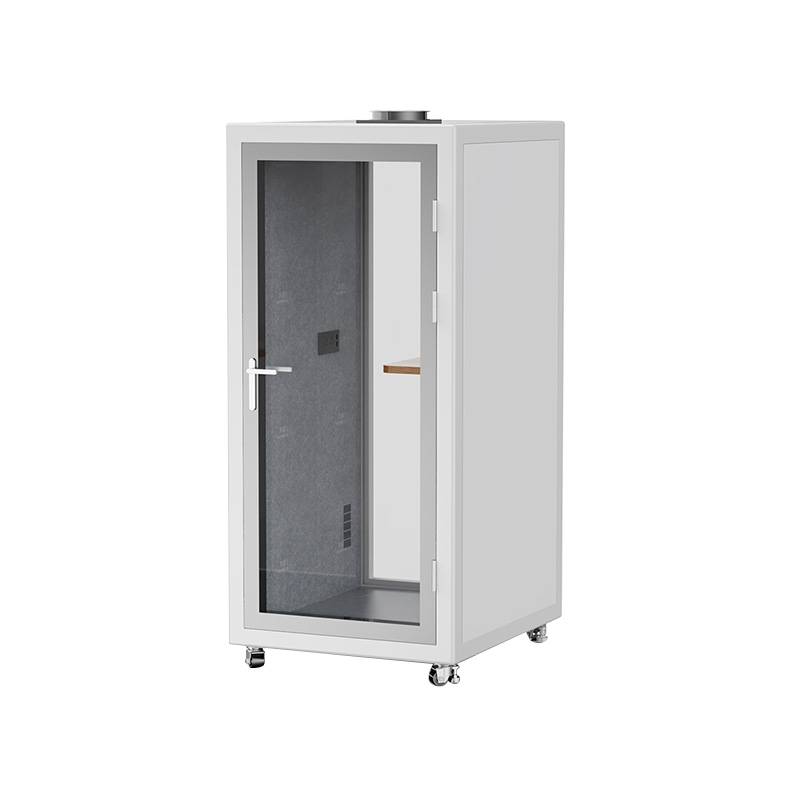
中文简体In the modern landscape of open-plan architectural design, the challenge of managing acoustic interference has led to the technical mastery of Offices Privacy Pods. These self-contained, modular environments are engineered to provide a sanctuary of silence amidst the high-decibel activity of contemporary corporate hubs. Unlike permanent drywall constructions, Offices Privacy Pods utilize a multi-layered composite shell designed to decouple internal air from external vibrations, effectively creating an acoustic barrier that can reduce ambient noise by up to 30 decibels. The core objective of these pods is to facilitate "deep work" and confidential communication without requiring structural alterations to the building's footprint. By integrating aviation-grade tempered glass, high-density acoustic felt, and honeycomb structural panels, these pods offer a precision-controlled micro-environment. This technical evolution does more than just block noise; it optimizes the internal soundscape for clarity during virtual meetings and concentrated cognitive tasks. As the need for on-demand privacy grows, the engineering behind these units has expanded to include motion-activated ventilation, ergonomic interior fit-outs, and fire-rated safety materials, establishing a new benchmark for flexible spatial solutions in the professional sphere.
Can the Multi-Layered Insulation of Offices Privacy Pods Effectively Neutralize High-Frequency Distractions?
The operational success of Offices Privacy Pods is primarily defined by their Sound Transmission Class (STC) rating and the quality of their insulation materials. Foundries and manufacturers must balance the thinness of the pod walls with the density required to absorb and reflect complex sound waves.
-
Composite Acoustic Barrier Engineering: Most high-performance Offices Privacy Pods utilize a sandwich-style wall construction. The exterior is typically composed of high-strength carbon steel or aluminum alloy, providing structural rigidity and fire resistance. Beneath this skin lies a layer of recycled polyester fiber acoustic felt or rock wool insulation, which serves to dampen vibration and absorb sound energy. This configuration is superior to single-material walls as it addresses different sound frequencies—the metal reflects high-frequency "chatter," while the porous internal layers neutralize low-frequency hums from HVAC systems or heavy machinery. The integration of "double-glazed" soundproof glass for the doors further enhances this effect, utilizing a vacuum or argon-filled gap between panes to break the path of sound transmission. This meticulous layering ensures that even in a bustling hallway, the interior of the pod remains as quiet as a private library.
-
Sealing Systems and Air-Tight Integrity: The acoustic performance of Offices Privacy Pods is only as strong as their weakest point, which is typically the door seal. Professional-grade pods employ automotive-grade magnetic suction seals or high-elasticity rubber gaskets that create a hermetic environment when closed. This prevents "sound leakage," where noise escapes or enters through microscopic gaps around the frame. Furthermore, the floor of the pod is often integrated with a vibration-damping baseplate covered in high-density nylon carpeting. This prevents "impact noise"—such as footsteps or the movement of chairs outside—from traveling through the building's subfloor and into the user's workspace. These sealing technologies are verified through rigorous decibel testing, ensuring that the "privacy" promised by the product name is a measurable, physical reality.
-
Ergonomic Interior Surface Treatment: Inside Offices Privacy Pods, the engineering focus shifts from sound "blocking" to sound "absorption." To prevent internal echo during phone calls or video conferences, the interior walls are lined with 100% recyclable acoustic felt. This material is designed with a specific NRC (Noise Reduction Coefficient) to prevent voice reverberation. This ensures that the user's voice sounds natural and clear to remote participants, rather than hollow or distorted. The inclusion of integrated LED lighting with adjustable color temperatures further enhances this ergonomic focus, allowing the user to switch between "Focus Mode" (cool white light) and "Rest Mode" (warm light) to match their cognitive needs.
|
Performance Metric |
Standard Open Workspace |
Offices Privacy Pods |
|---|---|---|
|
Ambient Noise Level |
65dB - 75dB (Average) |
25dB - 35dB (Internal) |
|
Acoustic Rating |
N/A |
STC 25 - STC 35 |
|
Air Exchange Rate |
Shared HVAC Control |
2.5 - 3.5 m³/min (Dedicated) |
|
Power Integration |
Static Wall Outlets |
USB-A/C, AC, & Wireless Charging |
|
Deployment Time |
Structural Construction |
2 - 4 Hours Assembly |
How Do Intelligent Ventilation and Air Filtration Systems Maintain Air Quality in Offices Privacy Pods?
A common technical concern regarding enclosed pods is the maintenance of air freshness and thermal comfort. Offices Privacy Pods address this through high-velocity, low-noise ventilation systems that ensure the internal atmosphere remains crisp and oxygen-rich, even during prolonged use.
-
Sensor-Driven Air Exchange Cycles: The modern "product word" for pod ventilation is "Dynamic Air Refresh." These systems are equipped with infrared motion sensors that activate the fans the moment a user enters the pod. The fan units—often located in the ceiling or the floor chassis—are engineered with "labyrinthine" air ducts that allow air to pass through while trapping sound waves. This ensures that the ventilation remains whisper-quiet, typically operating at less than 30 decibels. A high-quality Offices Privacy Pods unit can completely refresh its internal air volume every 60 to 90 seconds, preventing the buildup of CO2 which can lead to fatigue and reduced cognitive performance. This rapid exchange rate is essential for maintaining a "fresh air" feel in a compact space, making it a sustainable choice for back-to-back meeting schedules.
-
HEPA Filtration and Microbial Defense: To provide a truly healthy micro-environment, many Offices Privacy Pods now integrate medical-grade HEPA filters or UVC sterilization lamps within their air intake modules. These systems capture fine dust particles, allergens, and airborne pathogens before they enter the breathing zone. Some advanced models also utilize photocatalytic oxidation (PCO) technology to neutralize volatile organic compounds (VOCs) that might be released from office carpets or furniture. This level of environmental control transforms the pod from a simple quiet room into a "wellness chamber," ensuring that the user is protected from the environmental pollutants common in large, shared building spaces.
-
Thermal Regulation and Comfort Engineering: In addition to air movement, managing heat is critical. The electronic components of Offices Privacy Pods—including the LED drivers and power sockets—are isolated from the main air stream to prevent heat transfer to the user. The exhaust fans are positioned to create a natural convective flow, pulling cool air from the floor and expelling warmer air through the roof. Some premium pods even offer localized climate control via compact thermoelectric cooling modules, allowing the user to adjust the temperature via a digital touch panel inside the pod. This ensures that even during a stressful negotiation or a long creative session, the user remains thermally comfortable and focused.
Why Is Modular Structural Engineering Essential for the Portability and Scalability of Offices Privacy Pods?
The durability and longevity of a privacy pod depend on its ability to be assembled, disassembled, and relocated without compromising its acoustic or structural integrity. Offices Privacy Pods are designed as "kit-of-parts" systems that prioritize mechanical precision and material resilience.
-
Precision-Fit Aluminum Framing and Tool-Free Assembly: The skeleton of high-end Offices Privacy Pods is usually constructed from aerospace-grade 6063-T5 aluminum extrusions. These frames are machined to tolerances of less than 0.1mm to ensure that every panel fits perfectly, which is crucial for maintaining the acoustic seal. Many modern designs utilize "cam-lock" or "snap-fit" mechanisms that allow the pod to be assembled by two people in just a few hours. This modularity means that as an organization grows or moves, the pods can be flat-packed and reinstalled in a new location, offering a much higher return on investment than traditional built-in construction.
-
Structural Load-Bearing and Safety Glass Integration: To support the weight of the heavy acoustic panels and glass doors, Offices Privacy Pods feature reinforced corner joints and load-bearing floor modules. The glass used is always 10mm to 12mm tempered safety glass, often with an interlayer of PVB (Polyvinyl Butyral) for extra sound damping and safety. In the event of a catastrophic impact, the glass is designed to crumble into small, blunt pieces rather than sharp shards. Furthermore, the pods are engineered to be "seismic resistant," ensuring they remain stable even in buildings subject to vibration or minor tremors. This focus on structural safety is verified through independent testing to meet international building codes such as UL or CE standards.
-
Sustainability and Material Life-Cycle Management: The materials selected for Offices Privacy Pods are increasingly focused on environmental responsibility. The steel and aluminum components are 100% recyclable, and the acoustic felt is often made from recycled plastic bottles (rPET). Because the pods are independent units, they do not require the demolition or waste associated with traditional office remodeling. This "plug-and-play" nature allows for the "product word" of "Future-Proofed Workspaces," where the physical environment can adapt to changing team sizes and work styles with minimal environmental impact. By combining high-performance acoustics with sustainable engineering, these pods provide a durable and ethical solution for the evolving global office.
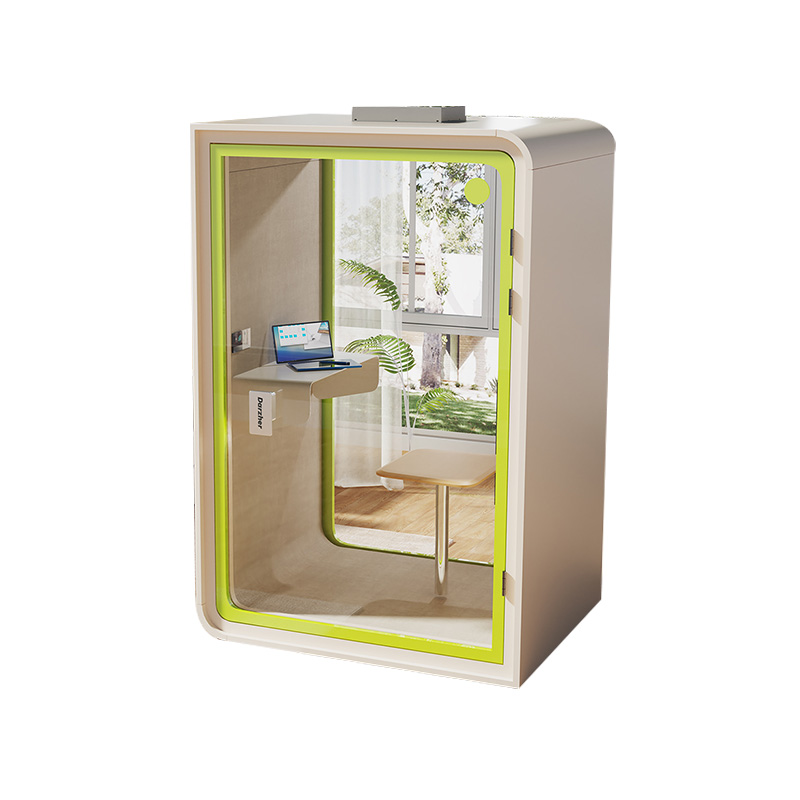
W2200D1535H23000000.png "Boardroom Pod")
 Add: Building18, No. 331, Haidong Road, Lihai Street, Yuecheng District, Shaoxing City, Zhejian, China
 Tel: +86-18057599511 / +86-0575-89291658
 Fax: +86-0575-89291658
 Email: