 Get A Quote



 English
 中文简体
Place two samples side by side on the same desk: a stitched cloth mat and a square of micro-etched tempered glass. Both are sold under the same three words — gaming mouse pads — yet they behave like products from different categories. The cloth pad grips, absorbs moisture, and slowly fuzzes at the edges after a few hundred hours of play. The glass pad stays dimensionally flat, wipes clean in seconds, and returns essentially the same glide on day 300 as it did on day one, as long as the texture was controlled during manufacturing and not sprayed on afterward.
Here is the conclusion up front: on a gaming mouse pad, three variables decide whether the product earns repeat orders — surface texture consistency, base grip, and edge construction. Everything else, from print design to packaging, is secondary. The good news for buyers, brand owners, and distributors is that all three variables can be written into a specification, measured at incoming inspection, and repeated across production lots.
What follows is a working guide to the category, written from the manufacturing side: how the major surface families behave, where they fail, what to put on a request for quotation, and how to evaluate a sample in half an hour instead of a week of guessing.
What a Gaming Mouse Pad Actually Does
A mouse pad is not decoration. It performs four engineering jobs at once, and each one maps to a specification.
The first is sensor consistency. An optical or laser sensor reads the surface beneath it. On a bare desk with grain, glare, or a lacquered finish, tracking can drift between regions of the same table, and lift-off distance behaviour can change as the sensor crosses a reflective patch. A uniform pad removes that variation, which is why tournament organisers standardise surfaces rather than trusting whatever the venue provides.
The second is friction management. Competitive players talk about glide and stopping power as if they were opposites, but physically they are two halves of the same curve: the force needed to start the mouse moving (static friction) and the force needed to keep it moving (kinetic friction). A pad with a wide gap between the two feels sticky on micro-adjustments. A pad with a narrow gap feels fast but vague. The surface texture sets that curve, and consistency of the texture across the whole pad matters more than the absolute value.
The third is desk protection and hygiene. Pads take the wear that would otherwise land on laminate, veneer, or coated MDF. They also collect skin oil, dust, and drink spills, which means cleanability is a genuine product attribute — not a footnote. Surfaces that can be wiped rather than scrubbed have a real advantage in shared or commercial environments, from esports cafés to office hot-desking.
The fourth is acoustic and tactile feedback. The sound of a mouse moving is part of how players judge speed. Cloth mutes it; hard surfaces amplify it. Neither is wrong, but it is a reason why customers who switch materials often report that the product "feels different" even when the sensor settings are identical.
One more framing point that purchasing teams should keep in mind: a mouse pad is a wear item with a replacement cycle. That cycle — six months for a heavily used cloth pad, several years for a well-made glass pad — shapes retail planning, warranty policy, and how much a buyer should be willing to pay per unit at the factory gate.
The Four Surface Families and How They Behave
Almost every gaming mouse pad on the market falls into one of four families. They are not equivalent, and switching between them changes the play experience far more than changing mouse sensitivity settings.
| Surface family | Glide character | Stopping control | Typical failure pattern | Best fit |
|---|---|---|---|---|
| Woven cloth, uncoated | Moderate, slightly textured | High, forgiving | Edge fray, compression at the wrist zone, odour retention | General gamers, office crossover, low-cost volume lines |
| Coated or tight-weave cloth | Fast, smooth, low initial friction | Moderate to low | Coating burnishes or wears through in the centre within months | Speed-focused players, lightweight mice |
| Hard polymer or polycarbonate | Very fast, very consistent | Low but predictable | Surface scratches, base peel, audible glide | High-DPI players, low-friction preference |
| Tempered glass with micro-etching | Fast and highly repeatable | Moderate, texture-dependent | Dust films visible quickly; impact damage if packaging is weak | Long-life premium lines, esports venues, buyers tired of replacements |
Cloth dominates volume because it is cheap to produce, forgiving on imperfect desks, and easy to print. Its weakness is structural: fibres compress where the wrist and mouse pivot sit, and stitched edges are the first thing to go if the stitch density or thread tension is set too low. A cloth pad that sells at a premium must earn it through base quality and edge finishing, not through artwork.
Hard polymer pads solve the compression problem and deliver excellent consistency, but they are noisy, they scratch, and their rubber feet or base adhesive is often the weak point in shipping and in hot climates.
Glass is the newest of the four to reach mainstream volume, and it behaves differently enough that it deserves its own discussion.
Why Micro-Etched Glass Changes the Equation
Etched glass pads are not simply "glass with a texture". The manufacturing sequence matters. The glass is cut, edges are ground and polished, the surface is treated to create a controlled micro-relief, and the sheet is then tempered so that the finished piece carries a compressive stress layer at the surface. That stress layer is what makes the pad resist chipping and, if it does break, break into small blunt fragments rather than long shards.
The micro-etching is the performance-critical step. Because the texture is formed in the glass itself rather than applied as a coating, there is no sprayed layer to burnish away. A cloth pad's fastest days are its first days; a properly etched glass pad's glide is essentially the same in month eighteen as in week one, provided the surface is kept free of grit and oil. That repeatability is the single strongest commercial argument for the material, and it is also the easiest claim to verify: take a sample, measure the glide at five points across the surface with the same mouse and the same feet, wear it for a month, and measure again.
Three practical consequences follow for buyers.
First, the base matters as much as the glass. A glass sheet on a bare desk will slide, and a sliding pad is worse than no pad at all. Look for a full-coverage non-slip backing that does not leave adhesive residue, and check that the backing survives a 60-degree, 48-hour storage test without lifting at the corners.
Second, packaging is a design problem, not an afterthought. Glass is heavy and it is brittle under point impact. Corner protection, foam or moulded pulp cradles, and a drop test that matches the retail channel are not optional for this category.
Third, cleaning instructions must ship with the product. Dust on glass is invisible at low angle and very audible under a mouse. A ten-second wipe with a microfibre cloth restores the surface completely, but a customer who does not know that will read the grit as a defect and file a return. Clear care instructions reduce returns more cheaply than any change to the bill of materials.
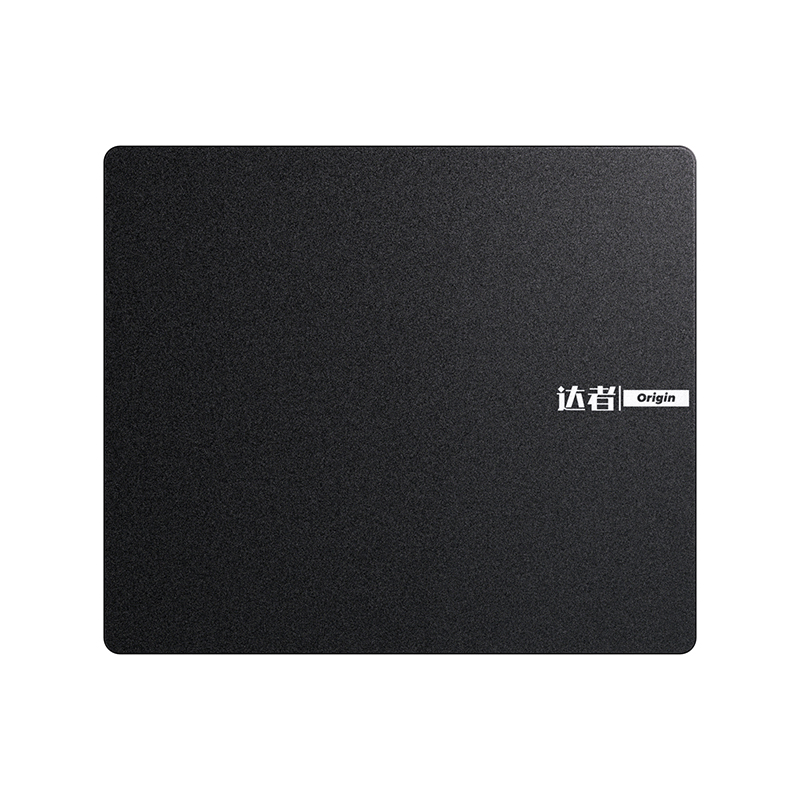 Pro Gaming Edition Tempered Glass Mouse PadsWholesale mouse pads with 3mm tempered glass and a micro-etched surface, suited to esports venues and buyers who value repeatable glide and simple cleaning.View Product →
For buyers evaluating this category for the first time, the useful question is not "is glass better than cloth" but "which customer segment will pay for repeatability and accept the care routine". LAN venues, esports training rooms, and enthusiasts who replace cloth pads twice a year are the natural audience.
Size, Thickness, and Construction Details That Decide Quality
Once the surface family is fixed, the second layer of decisions is dimensional and mechanical. These are the details that generate most after-sales complaints, and they are all cheap to control during production.
Footprint. The category has settled into rough size bands: compact pads for low-sensitivity arm aiming, extended mats that sit under both keyboard and mouse, and full-desk mats that cover the work surface. Extended and full-desk formats are heavier and harder to keep flat, so warpage tolerance becomes the governing specification, not the nominal dimensions.
Thickness and flatness. Thicker cloth pads feel plusher and hide desk imperfections, but they also compress more under a wrist and can develop a permanent dip. Thin pads sit flatter and give a harder, more consistent feel. Whatever the target, specify flatness rather than thickness alone: a pad that curls 8 mm at the corner will not lie down on a customer's desk, no matter how good the fabric is.
Base compound. Natural rubber gives excellent grip but can carry odour if the curing cycle is rushed. Polyurethane and thermoplastic elastomer bases are cleaner in the box and more stable in hot warehouses. For any market with long container dwell times, ask for the odour rating and the heat-ageing behaviour, not just the hardness value.
Edge finishing. Stitching density, thread type, and the height of the stitched bead determine whether the edge survives a year of forearm contact. On hard pads, the equivalent question is chamfer quality: a sharp machined edge is a comfort complaint waiting to happen, and on glass it is also a chip risk.
Print and colour. Dye-sublimation on cloth is the volume standard. Specify colour fastness to rubbing and to sweat, because a pad printed with a strong dark background will show a pale patch under the palm long before the fibres fail. On glass and hard surfaces, printing is usually applied to the underside or omitted entirely; either way, clarify which face the customer will touch.
The Sensor-to-Surface Interface: What Buyers Should Test
Marketing language around mouse pads is vague; sensor behaviour is measurable. Three parameters matter when qualifying a new surface.
Tracking stability across the pad. Move the same mouse across nine points in a grid at constant speed and watch for cursor jitter or cursor jump. A surface that tracks well in the centre but stutters near the printed logo has a print or coating thickness problem.
Lift-off distance behaviour. Sensors that lift off early feel precise in flicking but can cut out during low-sensitivity arm sweeps. The pad's surface texture influences how the sensor interprets the image at the edge of its focus range, so test lift-off on the pad, not on the desk.
Performance with the feet your customers actually use. Aftermarket PTFE feet are common, and virgin PTFE glides very differently from the stock feet shipped with most mice. Qualify the pad with at least two foot types, because the friction curve a reviewer describes may not match the experience of a buyer who swapped feet on day one.
A related caution about glass: clear, transparent glass is a poor tracking surface for optical sensors because there is nothing for the sensor to image. Etched, tinted, or opaque glass with a defined micro-texture is a different story. Still, validate with the actual sensor families your customers use rather than assuming that one positive test generalises to all of them.
For teams that want a broader grounding in how surface choice affects aim and comfort, this overview of how gaming mouse pads enhance performance and comfort is a useful companion to a hands-on sample test.
Durability: What Fails First, and How to Test For It
Every surface family has a characteristic failure mode, and knowing it turns a vague warranty conversation into a targeted test.
- Cloth: edge fray, fibre compression in the pivot zone, dye fading, and odour retention. Test with a 5,000-cycle abrasion pass in the centre plus a wet-rub colour fastness check.
- Coated cloth: coating burnishing, which shows up as a glossy patch where the mouse most often travels. Test by measuring glide at the same point before and after abrasion cycles.
- Hard polymer: scratching, base peel, and warpage under heat. Test with a steel-wool rub and a 60-degree storage soak.
- Etched glass: impact chipping at corners, base adhesive failure, and visible dust films. Test with a corner drop, a peel test on the backing, and a cleaning-cycle check.
Two cross-cutting tests are worth standardising whatever the material. The first is a sweat and sunscreen resistance test, because hand chemistry varies enormously between markets and a pad that survives clean hands may stain under a player who uses hand lotion. The second is a repeated clean test: wipe the surface fifty times with the recommended cloth and cleaning agent, then re-measure glide. A pad that changes character after fifty wipes is a pad that will generate complaints from exactly the customers who care most about it.
Humidity, Temperature, and Hand Chemistry: Matching Product to Market
Mouse pads are climate-sensitive products, which is why a single specification rarely suits every export market.
In hot, humid regions, cloth pads absorb moisture from the air and from the hand. Fibres swell slightly, glide slows, and odour develops faster. Rubber bases with incomplete cure become noticeably more pungent in a warm warehouse. For these markets, tighter weave, an antimicrobial treatment, and a well-cured base compound are worth the small cost premium. Retailers in these regions also benefit from pads that can be washed and dried quickly without losing shape.
In cold, dry regions, the opposite failure appears: static. Cloth can crackle and attract dust, and a pad that has been in an unheated container for weeks may arrive with a permanent curl. Packaging that keeps the pad flat, plus a base formulation that stays flexible at low temperature, prevents a wave of "arrived bent" complaints in the first weeks of a season.
Hand chemistry is the third variable and the least discussed. Acidic sweat, sunscreen, and hand sanitiser residue all attack surfaces differently. A pad qualified only with clean, dry hands in a laboratory has not really been qualified. Ask for a stain resistance report on the specific print colours in your range, and prefer prints that hide palm-zone marking if the product is aimed at heavy users.
These differences are one reason a manufacturer's export mix matters. A factory that ships regularly to North America, Europe, and Southeast Asia learns to hold several base and finish specifications rather than one, and can advise which variant belongs in which catalogue.
Ergonomics: Desk Height, Arm Angle, and the Surface You Actually Play On
The pad is only one element of the interface between player and machine. The other is the height and position of the desk, and this is where most complaints about wrist fatigue actually originate.
When a desk is too high, the forearm angles upward, the wrist extends, and the natural pivot point of the mouse hand shifts onto the carpal tunnel rather than the forearm. No pad thickness fixes that; it simply hides the symptom for an hour. When the desk is too low, the shoulder rounds and the elbow loses support, which shows up as fatigue in long sessions rather than as wrist pain. The practical target for most players is a desk height that puts the elbow at roughly ninety degrees with the shoulder relaxed, and a chair armrest that meets the underside of the forearm without lifting it.
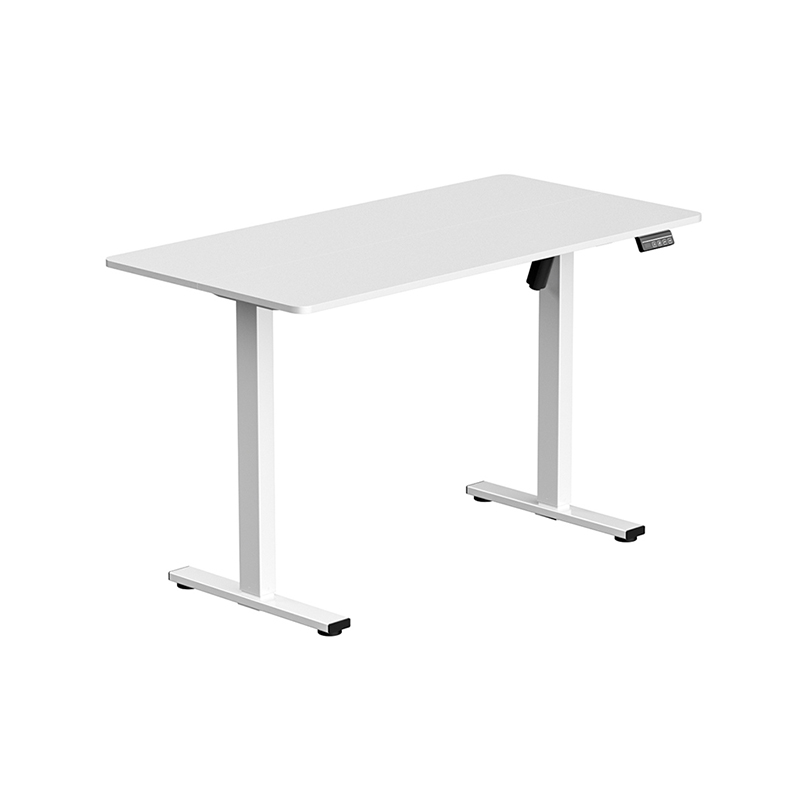
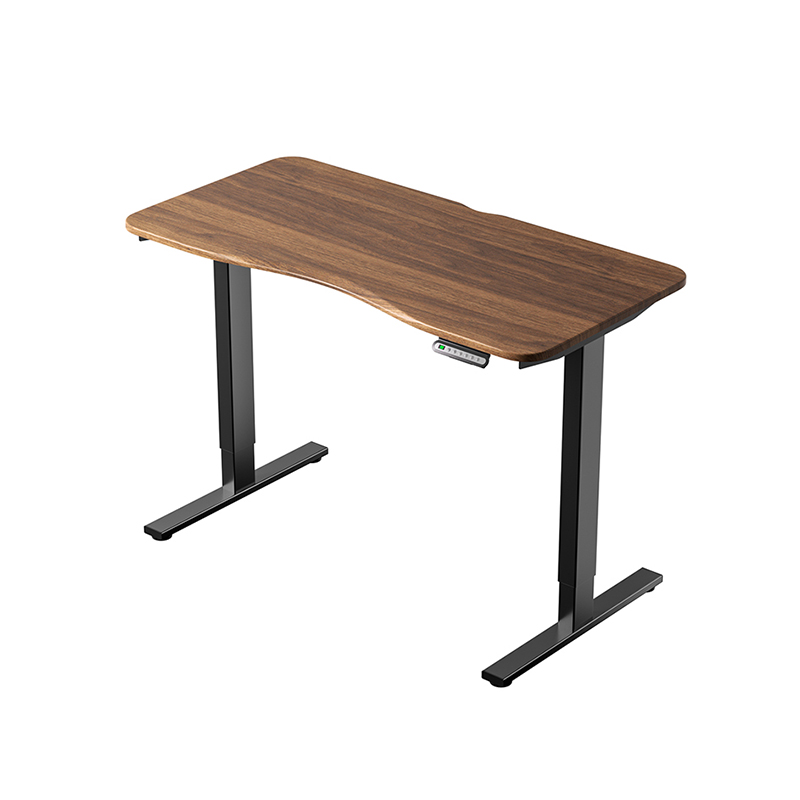
That is the reason height-adjustable desks belong in a conversation about gaming surfaces. A fixed desk is a compromise for one body type; an adjustable frame lets the same desk serve a tall player, a shorter player, and the same player standing for part of a long session. Our electric height adjustable desks range exists for exactly this reason, and a glass-topped gaming model pairs naturally with a glass pad because both share the same cleaning routine and the same resistance to ink, sweat, and drink spillage.
The surface match matters more than it sounds. A glass pad on a glass desktop is visually coherent, but check the base grip on that specific combination: glass on glass with a thin rubber backing can walk under aggressive arm sweeps. A textured or coated steel frame top, or a glass top with a matte finish and a well-specified pad backing, avoids the problem entirely.
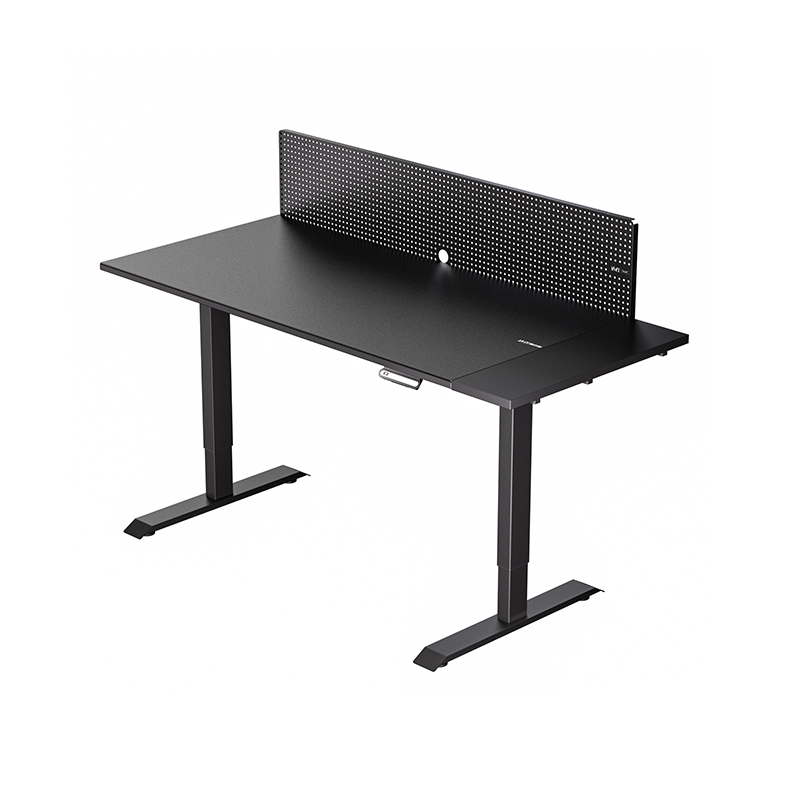 Gaming Glass Electric Lifting TableWholesale electric height-adjustable desk with a textured anti-reflective glass top, offering sit-stand switching for gaming and home-office setups.View Product →
For buyers assembling a complete gaming bundle rather than a single SKU, matching pad and desk from the same production partner also simplifies packaging design, freight consolidation, and the after-sales story: one supplier, one spec sheet, one warranty conversation.
Writing the RFQ: A Specification Checklist
Most sourcing problems start with a vague enquiry. A gaming mouse pad that "looks like the sample" is not a specification. Include the following in the request for quotation and the number of clarification emails drops sharply.
- Intended use and segment: esports performance, casual retail, office crossover, or promotional.
- Surface family and texture target, with a physical reference sample or a measured glide description.
- Nominal length, width, and thickness, each with a tolerance — for example ±1.5 mm on planar dimensions.
- Flatness or warpage limit, stated as a maximum corner lift after 24 hours at rest.
- Base material, hardness range, and non-slip performance on glass, laminate, and coated MDF.
- Edge construction: stitched with defined stitch density, heat-cut, or polished chamfer.
- Print method, artwork files, colour reference system, and colour fastness requirement.
- Surface treatments: antimicrobial, hydrophobic, anti-glare, or none.
- Odour requirement and the test method used to verify it.
- Packaging format: flat, rolled, or hang-sell, with drop test standard and retail labelling.
- Compliance documentation for the destination market, agreed by material rather than by product family.
- Sampling timeline, pre-production sample approval steps, and the inspection plan for mass production.
Two questions deserve a separate line in the enquiry because they are where quotations most often diverge. First, what is the actual production tolerance on print registration and cut dimensions, not the catalogue tolerance? Second, what changes between the sample and the mass-production run — different fabric lot, different base supplier, different curing line? A supplier who can answer both without hesitation is usually a supplier who has already been through a difficult shipment.
Quality Control Checks Before Bulk Production
Inspection should be designed around failure modes rather than around a general visual sweep. The table below is a practical starting point for a pre-shipment inspection plan.
| Check | Method | Defect it catches |
|---|---|---|
| Dimensional and cut accuracy | Measure five units against drawing, both axes | Trim drift, mismatched silhouette, packaging misfit |
| Flatness | Rest on a granite or glass reference surface for 24 hours, measure corner lift | Warpage from base cure or storage |
| Surface consistency | Glide check at five fixed points with the same mouse and feet | Uneven texture, coating thickness variation, print ridges |
| Edge integrity | Visual plus 2 kg pull on stitched edge; fold test on hard pads | Loose stitch, thread break, sharp chamfer |
| Base adhesion and grip | Peel test at corners; slide test on glass and laminate | Backing lift, pad migration during play |
| Print quality | Colour comparison to approved sample under defined light; wet rub | Colour drift, low fastness, halo at edges |
| Odour | Sealed-bag panel test after 24 hours | Under-cured rubber, solvent residue |
| Packaging | Drop test per channel requirement; open-and-reclose check | Corner damage, retail presentation failure |
Two working notes on inspection. Sample size should scale with lot size and with how new the product is; a first production run deserves a tighter AQL than a repeat order of a stable SKU. And every check needs a written pass criterion agreed before the run, otherwise the discussion after inspection becomes a debate about opinion rather than about data.
Wholesale, Private Label, and Range Planning
For distributors and brand owners, the mouse pad category is attractive because it is light, easy to private-label, and often bought alongside other desk products. It is also easy to over-range. A clean catalogue usually needs four to six SKUs, not twenty: one entry-level cloth pad in two sizes, one performance cloth or coated variant, one hard surface, and one premium glass pad. That spread covers the price ladder without forcing a retailer to guess which of nine similar mats to stock.
Private label adds a few requirements to the specification. Artwork files should be supplied in a print-ready format with a defined colour target, and the supplier should confirm how colour will be verified on the production surface — because a colour approved on paper rarely matches the same colour on woven fabric. Packaging artwork needs its own approval cycle with dieline confirmation, barcode placement, and market-specific labelling.
Custom development is the other half of the wholesale conversation. A buyer with a drawing, a sample, or a specific desk dimension can usually get a dedicated size and base combination, and a factory that handles its own sheet metal, wood, coating, and assembly work can synchronise a pad launch with a desk launch rather than treating them as separate projects. If the range includes our
Tempered Glass Gaming Mouse Pads and OEM CustomizationTempered-glass mouse pad range with micron-level etching and OEM/ODM support for desk sizes, sensor types, drawings, and batch delivery.View Product →
catalogue, it is worth asking which surfaces are stocked as standard and which require a tooling or minimum-quantity commitment, since that answer determines launch timing far more than unit price does.
Six Buying Mistakes That Cost Real Money
Most of the expensive problems in this category are predictable. These six recur often enough to be worth naming.
- Approving a hand-made sample, then accepting a production run made differently. Always ask what changes between the counter sample and mass production.
- Specifying thickness but not flatness. Thickness is easy to measure and rarely the real cause of a complaint; curl is.
- Ignoring packaging for a heavy product. Glass pads and full-desk cloth mats fail in transit far more often than in use.
- Testing only with clean hands and one mouse. Sweat, sunscreen, and aftermarket feet change the result substantially.
- Buying on unit price while ignoring replacement rate. A cheaper pad that customers replace twice as often is the more expensive pad.
- Skipping the cleaning instruction. A large share of "defective surface" returns are resolved by a care card in the box.
Each of these has a cheap countermeasure: a written specification, a packaging drop test, a two-foot-type glide check, a lifecycle costing sheet, and a printed care card. None of them require a bigger budget, only a decision made earlier.
A Thirty-Minute Sample Evaluation Routine
Buyers often sit on samples for weeks because there is no defined process. A short, repeatable routine produces a defensible decision quickly.
- Minutes 0–5: unbox and inspect. Check corner condition, odour on opening, edge finish, and whether the pad lies flat immediately or needs weight.
- Minutes 5–10: dimensional check. Measure length, width, and thickness at three points. Note any deviation against the agreed tolerance.
- Minutes 10–18: glide and tracking. Run a fixed pattern at three sensitivities with two mouse feet types, and note any point on the pad where the cursor behaves differently.
- Minutes 18–24: grip and stability. Place the pad on glass, laminate, and coated MDF, and perform fast lateral sweeps. A pad that shifts on any of the three fails for multi-market retail.
- Minutes 24–28: cleaning test. Wipe with a microfibre cloth and the recommended agent, then re-check glide. Note whether the surface looks streaked under angled light.
- Minutes 28–30: documentation. Record results against the specification, photograph defects, and decide: approve, approve with conditions, or reject.
The value of writing the routine down is comparability. When a second sample arrives three months later, the same six steps produce numbers that can be set against the first set, instead of a vague memory of "it felt fine".
Cost Drivers and Lifecycle Value
Unit price in this category is driven by a short list of factors: surface material, base compound quality, edge construction method, print complexity and number of colours, packaging format, and order quantity. Of these, base quality and edge construction are where cost-cutting is least visible and most damaging, because they fail after the customer has already formed an opinion about the product.
Glass sits at a higher unit cost than cloth for obvious reasons — material, tempering, edge polishing, and heavier packaging — but its lifecycle economics are different. If a glass pad lasts three times as long and needs no replacement cycle in the retail plan, the cost per active year can be competitive at the premium end, where customers are buying repeatability rather than novelty.
The practical approach for a buyer is to model two numbers side by side: landed cost per unit, and expected replacement rate per hundred customers per year. The second number is an estimate, but even a rough figure changes the ranking of options. It also gives the sales team an honest story to tell, which is worth more than a marginally lower quote from a supplier who cannot document their process.
The Practical Takeaway
Gaming mouse pads look like a simple accessory and behave like a component. Surface family sets the friction curve, base and edge construction decide whether the product survives daily use, and packaging decides whether it arrives in sellable condition. Buyers who specify texture, flatness, grip, and care instructions get predictable repeat orders; buyers who specify a picture and a price get whatever the factory had on the line that week.
If there is one habit worth adopting from this guide, it is to test the surface the way customers will use it — with their feet, their sweat, their climate, and their cleaning routine — and to write those test conditions into the purchase order. That single step closes most of the gap between a promising sample and a shipment that sells through.



 Add: Building18, No. 331, Haidong Road, Lihai Street, Yuecheng District, Shaoxing City, Zhejian, China
 Tel: +86-18057599511 / +86-0575-89291658
 Fax: +86-0575-89291658
 Email:
